
Featured Posts

- Index of Psychological Studies of Presidents and Other Leaders Conducted at the Unit for the Study of Personality in Politics
- The Personality Profile of U.S. Supreme Court Associate Justice Brett Kavanaugh
- The Leadership Style of North Korean Leader Kim Jong-un
- North Korea Threat Assessment: The Psychological Profile of Kim Jong-un
- Russia Threat Assessment: Psychological Profile of Vladimir Putin
- The Personality Profile of 2016 Republican Presidential Candidate Donald Trump
- Donald Trump's Narcissism Is Not the Main Issue
- New Website on the Psychology of Politics
- Unit for the Study of Personality in Politics --- 'Media Tipsheet'
categories
- Afghanistan (228)
- Al Gore (2)
- Amy Klobuchar (4)
- Ayman al-Zawahiri (7)
- Barack Obama (60)
- Ben Carson (2)
- Bernie Sanders (7)
- Beto O'Rourke (3)
- Bill Clinton (4)
- Bob Dole (2)
- Campaign log (109)
- Chris Christie (2)
- Chuck Hagel (7)
- Criminal profiles (8)
- Dick Cheney (11)
- Domestic resistance movements (21)
- Donald Trump (31)
- Economy (33)
- Elizabeth Warren (4)
- Environment (24)
- George H. W. Bush (1)
- George W. Bush (21)
- Hillary Clinton (9)
- Immigration (39)
- Iran (43)
- Iraq (258)
- Jeb Bush (3)
- Joe Biden (13)
- John Edwards (2)
- John Kasich (2)
- John Kerry (1)
- John McCain (7)
- Kamala Harris (5)
- Kim Jong-il (3)
- Kim Jong-un (11)
- Law enforcement (25)
- Libya (18)
- Mahmoud Ahmadinejad (6)
- Marco Rubio (2)
- Michael Bloomberg (1)
- Michele Bachmann (173)
- Mike Pence (3)
- Military casualties (234)
- Missing person cases (37)
- Mitt Romney (13)
- Muqtada al-Sadr (10)
- Muslim Brotherhood (6)
- National security (16)
- Nelson Mandela (4)
- News (5)
- North Korea (36)
- Osama bin Laden (19)
- Pakistan (49)
- Personal log (25)
- Pete Buttigieg (4)
- Presidential candidates (19)
- Religious persecution (11)
- Rick Perry (3)
- Rick Santorum (2)
- Robert Mugabe (2)
- Rudy Giuliani (4)
- Russia (7)
- Sarah Palin (7)
- Scott Walker (2)
- Somalia (20)
- Supreme Court (4)
- Syria (5)
- Ted Cruz (4)
- Terrorism (65)
- Tim Pawlenty (8)
- Tom Horner (14)
- Tributes (40)
- Uncategorized (50)
- Vladimir Putin (4)
- Xi Jinping (2)
- Yemen (24)
Links
archives
- November 2021
- January 2021
- November 2020
- October 2020
- September 2020
- August 2020
- July 2020
- April 2020
- March 2020
- February 2020
- January 2020
- December 2019
- October 2019
- July 2019
- May 2019
- April 2019
- March 2019
- February 2019
- January 2019
- December 2018
- September 2018
- August 2018
- July 2018
- June 2018
- April 2018
- March 2018
- February 2018
- January 2018
- August 2017
- July 2017
- June 2017
- May 2017
- April 2017
- February 2017
- January 2017
- December 2016
- November 2016
- October 2016
- September 2016
- August 2016
- July 2016
- June 2016
- May 2016
- April 2016
- March 2016
- February 2016
- January 2016
- December 2015
- November 2015
- October 2015
- September 2015
- August 2015
- July 2015
- June 2015
- May 2015
- April 2015
- March 2015
- February 2015
- January 2015
- December 2014
- November 2014
- October 2014
- September 2014
- August 2014
- July 2014
- June 2014
- May 2014
- April 2014
- March 2014
- February 2014
- January 2014
- December 2013
- November 2013
- October 2013
- September 2013
- August 2013
- July 2013
- June 2013
- May 2013
- April 2013
- March 2013
- February 2013
- January 2013
- December 2012
- November 2012
- October 2012
- September 2012
- August 2012
- July 2012
- June 2012
- May 2012
- April 2012
- March 2012
- February 2012
- January 2012
- December 2011
- November 2011
- October 2011
- September 2011
- August 2011
- July 2011
- June 2011
- May 2011
- April 2011
- March 2011
- February 2011
- January 2011
- December 2010
- November 2010
- October 2010
- September 2010
- August 2010
- July 2010
- June 2010
- May 2010
- April 2010
- March 2010
- February 2010
- January 2010
- December 2009
- November 2009
- October 2009
- September 2009
- August 2009
- July 2009
- June 2009
- May 2009
- April 2009
- March 2009
- February 2009
- January 2009
- December 2008
- November 2008
- October 2008
- September 2008
- August 2008
- July 2008
meta
Psychology Faculty Publications
Following is a partial catalogue of psychological assessments of U.S. presidents and presidential candidates, foreign leaders, and rogue or terrorist leaders conducted at the Unit for the Study of Personality in Politics.
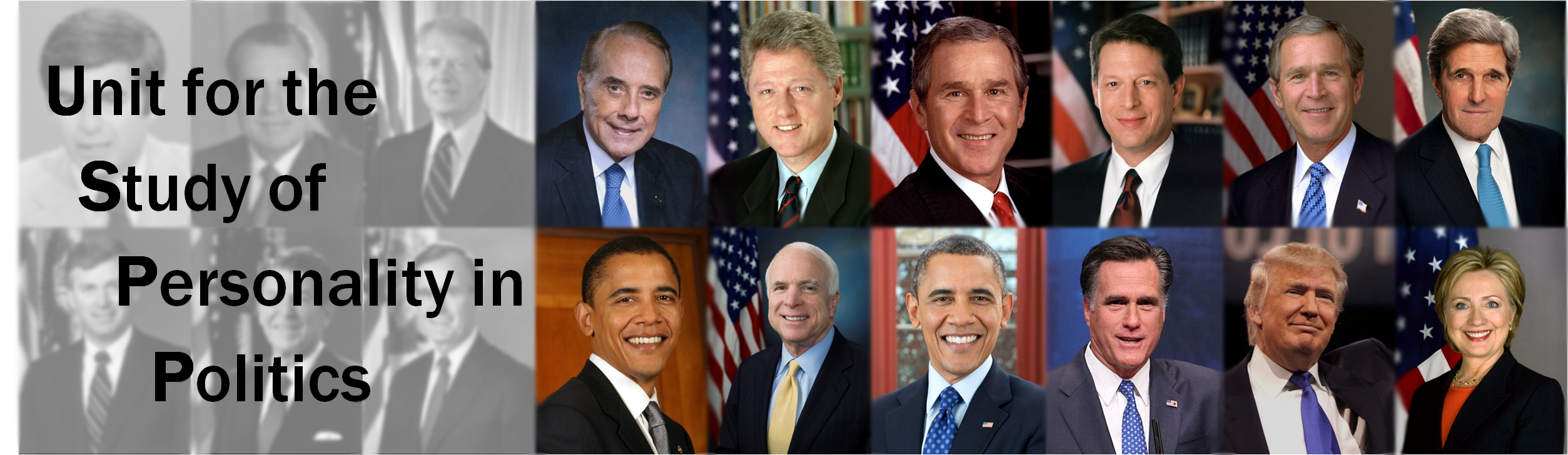
U.S. Presidents and Presidential Candidates
The Personality Profile and Leadership Style of U.S. President Joe Biden. Paper presented by Anne Marie Griebie and Aubrey Immelman at the 44th Annual Scientific Meeting of the International Society of Political Psychology, July 11–13, 2021 (virtual conference). Abstract and link for full-text (27 pages; PDF) download at Digital Commons: https://digitalcommons.csbsju.edu/psychology_pubs/132/
The Political Personality of 2020 Democratic Vice-Presidential Nominee Kamala Harris. Working paper by Anne Marie Griebie, Aubrey Immelman, and Yitao Zhang, Unit for the Study of Personality in Politics, St. John’s University/College of St. Benedict, September 2020. Abstract and link for full-text (26 pages; PDF) download at Digital Commons: https://digitalcommons.csbsju.edu/psychology_pubs/131/
The Political Personality of 2020 Democratic Presidential Nominee Joe Biden. Working paper by Anne Marie Griebie and Aubrey Immelman, Unit for the Study of Personality in Politics, St. John’s University/College of St. Benedict, August 2020. Abstract and link for full-text (22 pages; PDF) download at Digital Commons: https://digitalcommons.csbsju.edu/psychology_pubs/130/
The Personality Profile and Leadership Style of U.S. President Donald J. Trump in Office. Paper presented by Aubrey Immelman and Anne Marie Griebie at the 43rd Annual Scientific Meeting of the International Society of Political Psychology, Berlin, Germany, July 14–16, 2020. Abstract and link for full-text (71 pages; PDF) download at Digital Commons: http://digitalcommons.csbsju.edu/psychology_pubs/129/
The Political Personality of 2020 Democratic Presidential Contender Bernie Sanders. Working paper by Aubrey Immelman, Unit for the Study of Personality in Politics, St. John’s University/College of St. Benedict, March 2020. Abstract and link for full-text (24 pages; PDF) download at Digital Commons: https://digitalcommons.csbsju.edu/psychology_pubs/126/
The Political Personality of Former U.S. Vice President Joe Biden. Working paper by Aubrey Immelman, Unit for the Study of Personality in Politics, St. John’s University/College of St. Benedict, December 2019. Abstract and link for full-text (21 pages; PDF) download at Digital Commons: http://digitalcommons.csbsju.edu/psychology_pubs/122/
The Political Personality of U.S. Vice President Mike Pence. Working paper by Aubrey Immelman, Unit for the Study of Personality in Politics, St. John’s University/College of St. Benedict, May 2017. Abstract and link for full-text (19 pages; PDF) download at Digital Commons: http://digitalcommons.csbsju.edu/psychology_pubs/118/
The Leadership Style of U.S. President Donald J. Trump. Working paper by Aubrey Immelman, Unit for the Study of Personality in Politics, St. John’s University/College of St. Benedict, January 2017. Abstract and link for full-text (14 pages; PDF) download at Digital Commons: http://digitalcommons.csbsju.edu/psychology_pubs/107/
The Political Personality of 2016 Republican Presidential Nominee Donald J. Trump. Working paper by Aubrey Immelman, Unit for the Study of Personality in Politics, St. John’s University/College of St. Benedict, October 2016 (Paper presented at the 41st Annual Scientific Meeting of the International Society of Political Psychology, San Antonio, TX, July 4–7, 2018). Abstract and link for full-text (31 pages; PDF) download at Digital Commons: http://digitalcommons.csbsju.edu/psychology_pubs/103/
The Political Personality of 2016 Democratic Presidential Nominee Hillary Clinton. Working paper by Aubrey Immelman, Unit for the Study of Personality in Politics, St. John’s University/College of St. Benedict, October 2016. Abstract and link for full-text (34 pages; PDF) download at Digital Commons: http://digitalcommons.csbsju.edu/psychology_pubs/102/
Personality Profiles of the 2016 Republican Presidential Candidates. Forum lecture by Aubrey Immelman, St. John’s University/College of St. Benedict, November 5, 2015. Abstract and link for full-text (15 pages; PDF) download at Digital Commons: http://digitalcommons.csbsju.edu/forum_lectures/136/
The Political Personality of 2012 Republican Presidential Candidate Mitt Romney. Paper presented by Aubrey Immelman at the 35th Annual Scientific Meeting of the International Society of Political Psychology, Chicago, July 6–9, 2012. Abstract and link for full-text (35 pages; PDF) download at Digital Commons: http://digitalcommons.csbsju.edu/psychology_pubs/98/
The Political Personality of 2008 Democratic Presidential Contender John Edwards. Brief research report by Aubrey Immelman, Unit for the Study of Personality in Politics, St. John’s University/College of St. Benedict, June 2011. Abstract and link for full-text (3 pages; PDF) download at Digital Commons: http://digitalcommons.csbsju.edu/psychology_pubs/116/
The Political Personality of U.S. President Barack Obama. Paper presented by Aubrey Immelman at the 33rd Annual Scientific Meeting of the International Society of Political Psychology, San Francisco, CA, July 7–10, 2010. Abstract and link for full-text (19 pages; PDF) download at Digital Commons: http://digitalcommons.csbsju.edu/psychology_pubs/25/
The Political Personality of 2008 Republican Presidential Nominee John McCain. Research report by Aubrey Immelman, Unit for the Study of Personality in Politics, St. John’s University/College of St. Benedict, September 2008. Abstract and link for full-text (26 pages; PDF) download at Digital Commons: http://digitalcommons.csbsju.edu/psychology_pubs/115/
The Political Personalities of 2008 Republican Presidential Contenders John McCain and Rudy Giuliani. Paper presented by Aubrey Immelman at the 30th Annual Scientific Meeting of the International Society of Political Psychology, Portland, OR, July 4–7, 2007. Abstract and link for full-text (30 pages; PDF) download at Digital Commons: http://digitalcommons.csbsju.edu/psychology_pubs/28/
The Political Personality of 2004 Democratic Presidential Candidate John Kerry. Paper presented by Aubrey Immelman and Adam Beatty at the 28th Annual Scientific Meeting of the International Society of Political Psychology, Toronto, Canada, July 3–6, 2005. Abstract and link for full-text (25 pages; PDF) download at Digital Commons: http://digitalcommons.csbsju.edu/psychology_pubs/29/
The Political Personality of U.S. President George W. Bush. Book chapter by Aubrey Immelman in Linda O. Valenty & Ofer Feldman (Eds.), Political Leadership for the New Century: Personality and Behavior among American Leaders (pp. 81–103). Westport, CT: Praeger. Abstract and link for full-text (23 pages; PDF) download at Digital Commons: http://digitalcommons.csbsju.edu/psychology_pubs/52/
The Political Personalities of 2000 U.S. Presidential Candidates George W. Bush and Al Gore. Paper presented by Aubrey Immelman at the 23rd Annual Scientific Meeting of the International Society of Political Psychology, Seattle, WA, July 1–4, 2000. Abstract and link for full-text (49 pages; PDF) download at Digital Commons: http://digitalcommons.csbsju.edu/psychology_pubs/35/
The Political Personality of U.S. Vice President Al Gore. Paper presented by Aubrey Immelman at the 21st Annual Scientific Meeting of the International Society of Political Psychology, Montréal, Québec, Canada, July 12–15, 1998. Abstract and link for full-text (28 pages; PDF) download at Digital Commons: http://digitalcommons.csbsju.edu/psychology_pubs/37/
The Political Personalities of 1996 U.S. Presidential Candidates Bill Clinton and Bob Dole. Article by Aubrey Immelman, Leadership Quarterly, Vol. 9, No. 3, Special Issue: Political Leadership, Fall 1998, pp. 335–366. Abstract and link for full-text (32 pages; PDF) download at Digital Commons: http://digitalcommons.csbsju.edu/psychology_pubs/3/
Foreign Leaders
The Personality Profile and Leadership Style of Canadian Prime Minister Justin Trudeau. Paper presented by Juliana Khoury and Aubrey Immelman at the 44th Annual Scientific Meeting of the International Society of Political Psychology, July 11–13, 2021 (virtual conference). Abstract and link for full-text (33 pages; PDF) download at Digital Commons: https://digitalcommons.csbsju.edu/psychology_pubs/133/
The Leadership Style of North Korean Supreme Leader Kim Jong Un. Working paper by Aubrey Immelman, Unit for the Study of Personality in Politics, St. John’s University/College of St. Benedict, June 2018. Abstract and full text (17 pages; PDF) available for download at Digital Commons: https://digitalcommons.csbsju.edu/psychology_pubs/120/
The Personality Profile of North Korean Supreme Leader Kim Jong Un. Working paper by Aubrey Immelman, Unit for the Study of Personality in Politics, St. John’s University/College of St. Benedict, April 2018. Abstract and link for full-text (32 pages; PDF) download at Digital Commons: https://digitalcommons.csbsju.edu/psychology_pubs/119/
The Political Personality of Russian Federation President Vladimir Putin. Working paper by Aubrey Immelman and Joe Trenzeluk, Unit for the Study of Personality in Politics, St. John’s University/College of St. Benedict, January 2017. Abstract and link for full-text (36 pages; PDF) download at Digital Commons: http://digitalcommons.csbsju.edu/psychology_pubs/104/
The Political Personality of French President Nicolas Sarkozy. Paper presented by Pascal de Sutter and Aubrey Immelman at the 31st Annual Scientific Meeting of the International Society of Political Psychology, Paris, France, July 9–12, 2008. Abstract and link for full-text (24 pages; PDF) download at Digital Commons: http://digitalcommons.csbsju.edu/psychology_pubs/26/
The Political Personality of 2007 French Presidential Candidate Ségolène Royal. Paper presented by Pascal de Sutter and Aubrey Immelman at the 31st Annual Scientific Meeting of the International Society of Political Psychology, Paris, France, July 9–12, 2008. Abstract and link for full-text (29 pages; PDF) download at Digital Commons: http://digitalcommons.csbsju.edu/psychology_pubs/27/
The Political Personality of Zimbabwean President Robert Mugabe. Paper presented by Aubrey Immelman and Adam Beatty at the 26th Annual Scientific Meeting of the International Society of Political Psychology, Boston, MA, July 6–9, 2003. Abstract and link for full-text (28 pages; PDF) download at Digital Commons: http://digitalcommons.csbsju.edu/psychology_pubs/30/
South Africa in Transition: The Influence of the Political Personalities of Nelson Mandela and F. W. de Klerk. Paper presented by Aubrey Immelman at the 17th Annual Scientific Meeting of the International Society of Political Psychology, Santiago de Compostela, Galicia, Spain, July 11–14, 1994. Abstract and link for full-text (39 pages; PDF) download at Digital Commons: http://digitalcommons.csbsju.edu/psychology_pubs/41/
A Millon-Based Study of Political Personality: Nelson Mandela and F. W. de Klerk — Part I: Method and Preliminary Results. Paper presented by Aubrey Immelman at the 16th Annual Scientific Meeting of the International Society of Political Psychology, Cambridge, MA, July 6–11, 1993. Abstract and link for full-text (22 pages; PDF) download at Digital Commons: http://digitalcommons.csbsju.edu/psychology_pubs/42/
A Millon-Based Study of Political Personality: Nelson Mandela and F. W. de Klerk — Part II: Further Results and Implications. Unpublished manuscript by Aubrey Immelman, St. John’s University/College of St. Benedict, June 1994. Abstract and link for full-text (29 pages; PDF) download at Digital Commons: http://digitalcommons.csbsju.edu/psychology_pubs/97/
Terrorist Leaders
The Personality Profile of al-Qaida Leader Osama bin Laden. Paper presented by Aubrey Immelman at the 25th Annual Scientific Meeting of the International Society of Political Psychology, Berlin, Germany, July 16–19, 2002. Abstract and link for full-text (26 pages; PDF) download at Digital Commons: http://digitalcommons.csbsju.edu/psychology_pubs/69/
“Bin Laden ’s Brainâ€: The Abrasively Negativistic Personality of Dr. Ayman al-Zawahiri. Paper presented by Aubrey Immelman and Kathryn Kuhlmann at the 26th Annual Scientific Meeting of the International Society of Political Psychology, Boston, MA, July 6–9, 2003. Abstract and link for full-text (38 pages; PDF) download at Digital Commons: http://digitalcommons.csbsju.edu/psychology_pubs/31/
The Personality Profile of September 11 Hijack Ringleader Mohamed Atta. Paper presented by Aubrey Immelman at the 25th Annual Scientific Meeting of the International Society of Political Psychology, Berlin, Germany, July 16–19, 2002. Abstract and link for full-text (28 pages; PDF) download at Digital Commons: http://digitalcommons.csbsju.edu/psychology_pubs/32/
The Unit for the Study of Personality in Politics (USPP) is a research program in the psychology of politics at St. John’s University and the College of St. Benedict in Minnesota, directed by Aubrey Immelman, Ph.D., associate professor of psychology, who specializes in the psychological assessment of presidential candidates and world leaders.
The Unit is operated solely for research and educational purposes. It does not advocate support for or defeat of any candidate for political office. Political analysis published by the director or research associates of the USPP is the personal opinion of those individuals, based on empirical analysis of personality in politics and the influence of personality traits on high-level leadership.
Capitol attack leads Democrats to demand that Trump leave office (Peter Baker & Maggie Haberman, New York Times, Jan. 8, 2021) — [Speaker of the House] Pelosi and Senator Chuck Schumer of New York, the Democratic leader, called on [Vice President] Pence and the cabinet to invoke the 25th Amendment. But after the vice president refused to take their telephone calls, Ms. Pelosi told reporters that she would pursue impeachment if he did not act. “While it’s only 13 days left, any day can be a horror show for America,†Ms. Pelosi said, calling Mr. Trump’s actions on Wednesday a “seditious act.†“This president should not hold office one day longer,†said Mr. Schumer. …
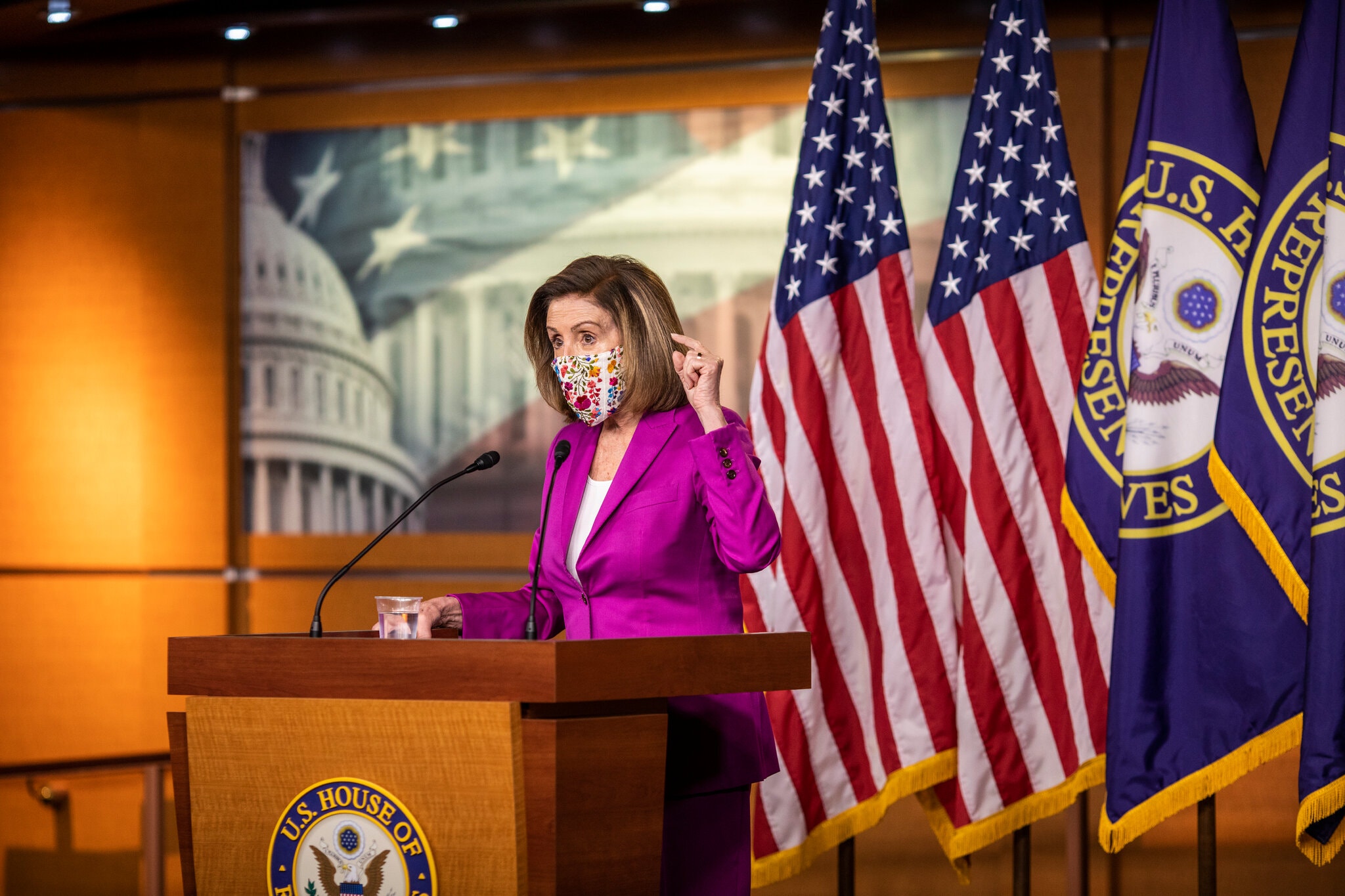
Speaker Nancy Pelosi called on Jan. 7, 2021 for President Trump to be stripped of his powers through the 25th Amendment or to be impeached again. (Photo credit: Jason Andrew / The New York Times)
Mob behavior and riots were foreseeable
The unintended consequences of President Donald Trump’s January 6 speech at the “Save America” rally and the subsequent “Stop the Steal” march could have been foreseen. Emotionally arousing his followers and then urging the crowd to march on the Capitol without providing structure or direction created a volatile situation, based on social-scientific knowledge regarding collective behavior — most notably emergent-norm theory. According to social scientists Ralph Turner and Lewis Killian (1957), crowds begin as collectivities composed of people with mixed interests and motives. In the case of less stable crowds — such as a large collective of demonstrators or protesters — norms may be vague and ambiguous, as when one person decides to break the glass windows of a storefront and observers join in and start looting; new, increasingly polarized, norms rapidly emerge and many people are caught up in those escalating norms even though their actions may be at odds with their typical social behavior.
Impeachment would be shortsighted and counterproductive
If there is a legitimate national security interest in restraining or incapacitating President Trump, impeachment may well be one of the worst interventions to diminish the perceived threat. If indeed the president is psychologically so unstable as to pose an imminent threat to public safety and social order, making him feel cornered and under siege would magnify, not mitigate, the potential threat.
———————————————
Update: January 12, 2021
Information has emerged that the attack on the Capitol was planned prior to the events of January 6, suggesting that collective behavior — specifically crowd psychology as conceptualized by emergent-norm theory, was not the primary driver of the mob behavior following the president’s rally:
FBI report warned of ‘war’ at Capitol, contradicting claims there was no indication of looming violence (Devlin Barrett & Matt Zapotosky, Washington Post, Jan. 12, 2021) — A situational information report approved for release the day before the U.S. Capitol riot painted a dire portrait of dangerous plans. … “As of 5 January 2021, FBI Norfolk received information indicating calls for violence in response to ‘unlawful lockdowns’ to begin on 6 January 2021 in Washington, D.C.,†the document says. “An online thread discussed specific calls for violence to include stating ‘Be ready to fight. Congress needs to hear glass breaking, doors being kicked in, and blood from their BLM and Pantifa slave soldiers being spilled. Get violent. Stop calling this a march, or rally, or a protest. Go there ready for war. We get our President or we die. NOTHING else will achieve this goal.†…
———————————————
Update: January 13, 2021
Trump impeached for inciting insurrection
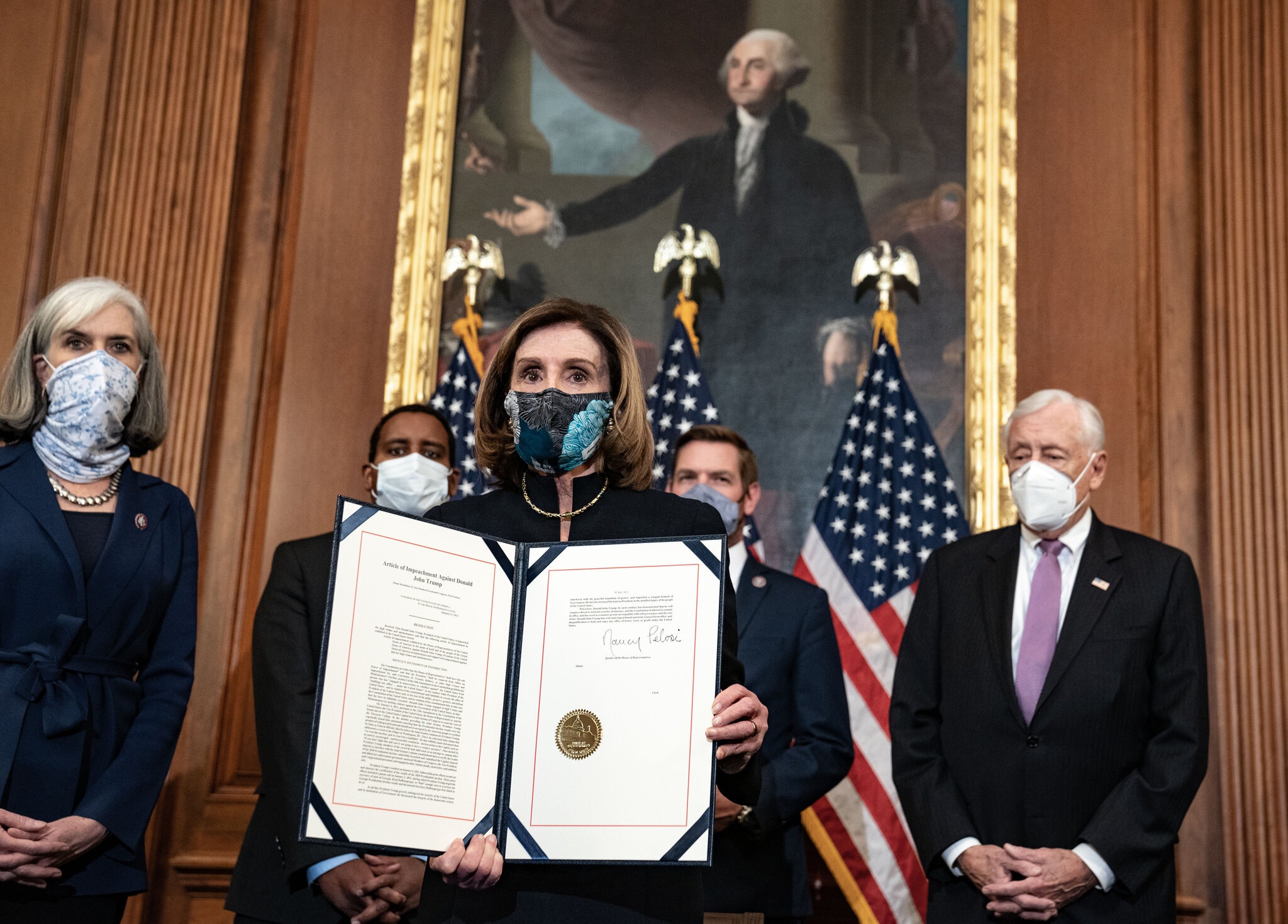
Speaker Nancy Pelosi with the article of impeachment, Jan. 13, 2021. (Photo credit: Anna Moneymaker / The New York Times)
Related report on this site
Donald Trump’s Temperament: Trump’s Fitness to be President (Oct. 5, 2016)

President-elect Joe Biden and Vice President-elect Kamala Harris meeting with their coronavirus advisory board in Wilmington, Del. (Photo: Amr Alfiky / The New York Times)
On November 15, the New York Times offered a “road map” with “four key elements” as a preview to how a President Joe Biden would govern (Want a preview of President Biden? by Katie Glueck and Thomas Kaplan).
Following is a collection of excerpts from the article, with commentary informed by Joe Biden’s personality profile.
Like President Bill Clinton, Joseph R. Biden Jr. is an empathetic extrovert with a sprawling network of friends. Like President George W. Bush, he maintains strict personal discipline.
Biden’s primary personality pattern pattern is Outgoing/gregarious (a measure of extraversion), complemented by a secondary Accommodating/cooperative pattern (of which empathy is a facet). Thus, the Times’ assessment is generally consistent with empirical analysis of Biden’s central personality traits. However, Biden’s personality profile provides only weak support for the Times’ assertion of “strict personal discipline.” Specifically, Biden’s low score on conscientiousness, in conjunction with an elevated outgoing score, suggests a less disciplined tendency — including a somewhat unfocused, impressionistic cognitive style lacking in substantive detail.
1. Joe Biden consults experts, elected officials, and his inner circle
Mr. Biden relied this year on a blend of expert opinion and conversations with elected officials across the country as he formulated his plans to confront the extraordinary public health and economic crises at hand, offering a glimpse of the kinds of input that may influence his decision-making as president. … Yet for all of the expert advice Mr. Biden will have available to him from the White House, his outlook is also influenced, in broad terms, by a core inner circle of aides, advisers and a few family members — namely, his wife and his sister — who have offered counsel to him for decades.
The Times’ assessment is consistent with empirical analysis of Biden’s Outgoing–Accommodating personality composite, which may be characterized as conciliatory extraversion.
2. Joe Biden can be loose with deadlines
People who have worked with Mr. Biden or know him personally describe him as a gut politician in some ways, but one whose instincts are shaped by conversations with close advisers and allies, by peppering aides with questions and by soliciting a range of opinions, whether from experts in a particular field or from trusted friends and supporters across the country.
This description is consistent with Biden’s conciliatory extraversion, in conjunction with a relatively low score on conscientiousness, which implies that Biden may be slow in reaching closure in his decision-making process.
3. At heart, Joe Biden is a man of he Senate
His experience in the Senate defined his political outlook — one that prizes consensus, civility and bipartisanship as essential to at least some progress — and helps explain why he will enter the White House with great respect for Congress. His insistence that he could “lower the temperature†politically was a central part of his pitch throughout the race, and he relished dismissing Democrats who called such an outlook naïve.
This description is as much emblematic of Biden’s personal orientation as a conciliatory extravert as it is of his decades-long service in the U.S. Senate.
4. Joe Biden has a mandate to be Joe Biden
Do expect to see a president who embraces the traditional role of serving as consoler in chief in times of tragedy. Mr. Biden’s ability to connect with people experiencing grief is one of his most distinctive attributes as a politician, following a car accident that killed his first wife and a baby daughter in 1972, and the death of his elder son, Beau Biden, in 2015.
Biden’s “ability to connect with people” is not only “one of his most distinctive attributes as a politician”; it is also a distinctive feature of his stable, enduring personality pattern, independent from the personal tragedy in his life.
—————————————
Update: May 26, 2021
President Biden’s Fitness to Govern
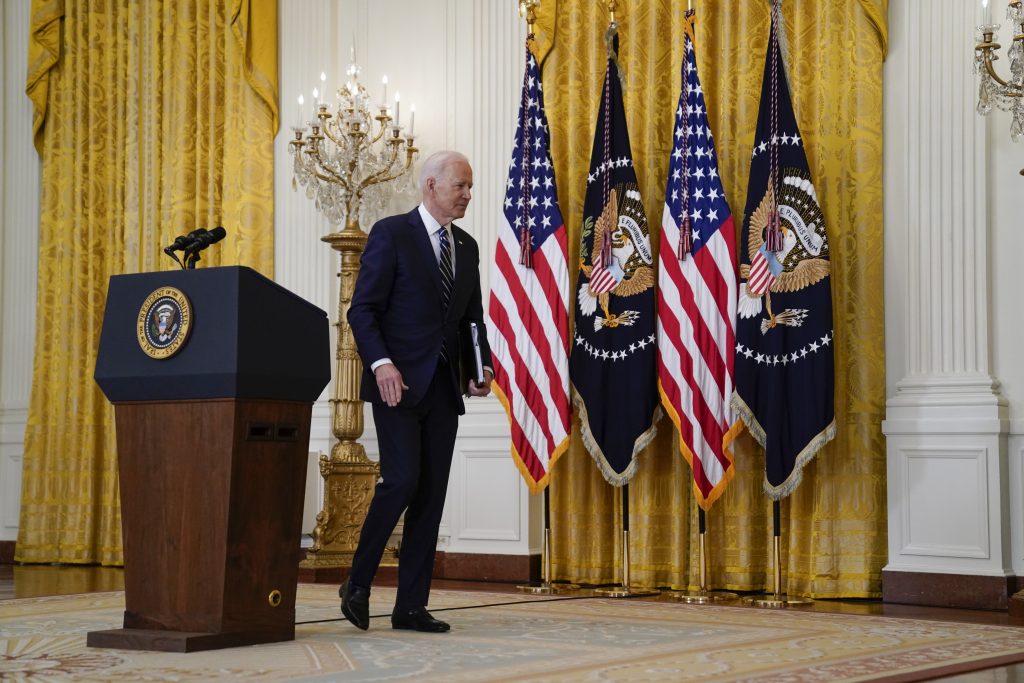
President Joe Biden leaving the East Room of the White House after a press conference. (Photo: Evan Vucci / AP via Hamodia)
On May 24, 2021, Hamodia — the daily newspaper of Torah Jewry — published an article examining President Biden’s physical and mental capacity to lead (“Is the president fit to serve?” by Rafael Hoffman)
The article quotes Dr. Stuart Jay Olshansky, professor of public health at the University of Illinois at Chicago, who analyzes the longevity of presidents; Dr. Nir Barzilai, director of Albert Einstein College of Medicine’s Institute for Aging Research; Tobe Berkovitz, associate professor of advertising at Boston University, who has worked as a media consultant for Democratic candidates; Dr. John Martin-Joy, author of Diagnosing from a Distance — a study of the history and ethics of the Goldwater Rule — who teaches psychiatry at Beth Israel-Deaconess Medical Center and Mt. Auburn Hospital in the Boston area; and Aubrey Immelman of the Unit for the Study of Personality in Politics, whose commentary is excerpted below.
Aubrey Immelman, an associate professor of psychology at Saint John’s University in Minnesota, published a personality study of candidates in the 2020 election that identified President Biden as having a propensity toward “flexibility, compromise, and an emphasis on teamwork.†Yet it also noted that his tendency to be conciliatory leaves him “vulnerable to manipulation by pressure groups.â€
Professor Immelman expressly avoided hypothesizing as to how his observations bear on the president’s mental health, but noted that his early actions were partially incongruous with the personality study.
“From my nonpartisan personality-in-politics perspective, the most puzzling aspect of President Biden’s first 100 days in office has been my observation that his political behavior has been more activist and less conciliatory than predicted by my personality profile, which is based on data collected since Mr. Biden’s run for president in 2007,†he said.
Related reports on this site
The Personality Profile of 2020 Democratic Presidential Candidate Joe Biden (Aug. 18, 2020)
 The Political Personality of 2020 Democratic Presidential Nominee Joe Biden. Working paper, Unit for the Study of Personality in Politics, St. John’s University/College of St. Benedict, August 2020. Abstract and link for full-text (22 pages; PDF) download at Digital Commons: https://digitalcommons.csbsju.edu/psychology_pubs/130/
The Personality Profile of 2020 Democratic Vice-Presidential Candidate Kamala Harris (Sept. 5, 2020)
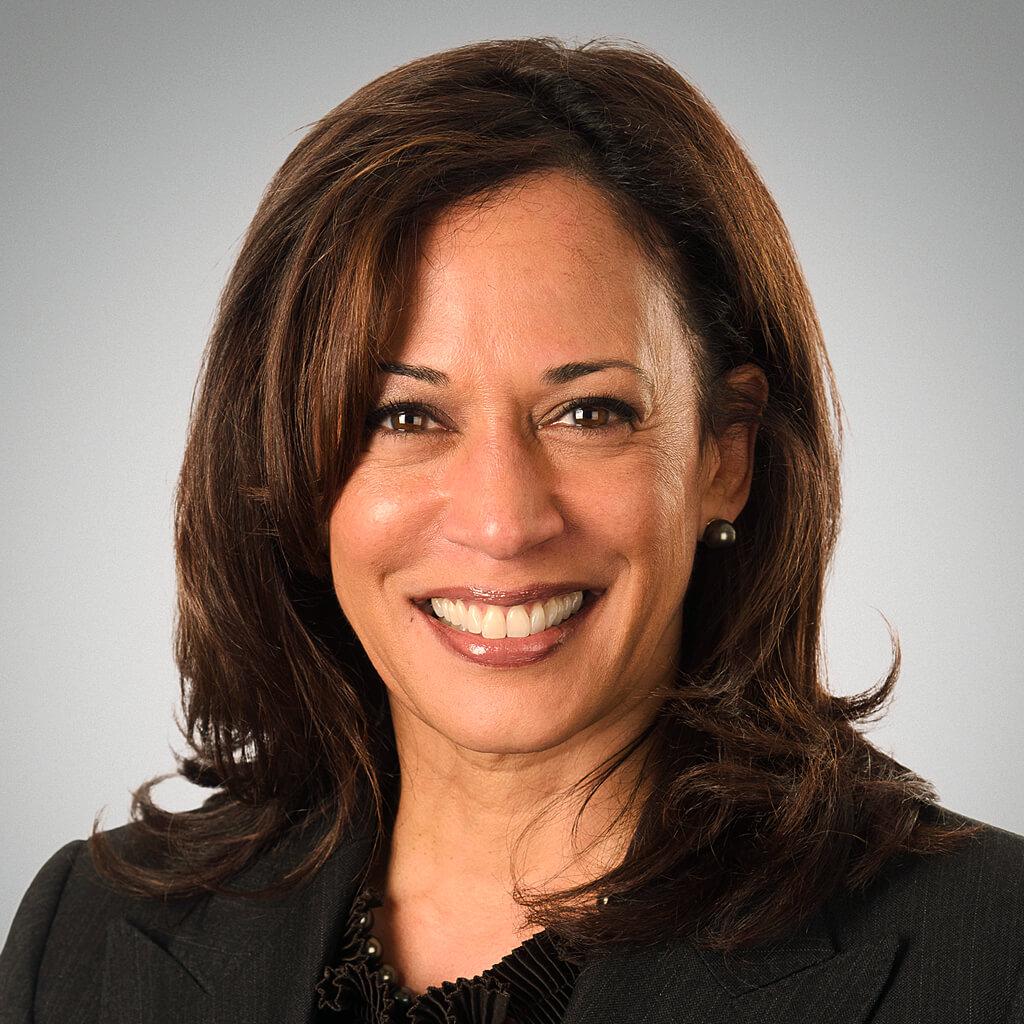 The Political Personality of 2020 Democratic Vice-Presidential Nominee Kamala Harris. Working paper, Unit for the Study of Personality in Politics, St. John’s University/College of St. Benedict, September 2020. Abstract and link for full-text (26 pages; PDF) download at Digital Commons: https://digitalcommons.csbsju.edu/psychology_pubs/131/
Historian who correctly predicted every election since 1984 makes his call
Fox News, October 30, 2020 — American University Professor Allan Lichtman joins “The Story†to make his prediction on who will win the 2020 presidential election. (4:07)
By Aubrey Immelman
Unit for the Study of Personality in Politics
November 1, 2020
On July 8, 2019, I announced that the Unit for the Study of Personality in Politics’s Personal Electability Index (PEI) projected that none of the seven front-running Democratic contenders assessed at the USPP — in descending order of PEI scores Joe Biden, Kamala Harris, Bernie Sanders, Amy Klobuchar, Beto O’Rourke, Pete Buttigieg, and Elizabeth Warren — would defeat Donald Trump in the 2020 U.S. presidential election.
At the time, this election-outcome forecast was at variance with contemporaneous polls, for example, an ABC News/Washington Post poll, conducted June 28-July 1, 2019, that showed Trump losing against or statistically tied with the front-runners for the Democratic nomination for president:
Among all adults …, Joe Biden leads Trump by 14 points. But that narrows among the other four Democrats tested against Trump in this poll — an 8-point lead for Kamala Harris, a slight 7 points for Elizabeth Warren, 6 for Bernie Sanders and 4 for Pete Buttigieg.

In the past several months, I have frequently had to field inquiries regarding the status of a projection issued so far in advance of the election — nearly 16 months. For example, on September 29, Cambridge, Mass., psychiatrist John Martin-Joy, M.D., as part of his research for a Psychology Today blog on Joe Biden’s mental state, wrote in an email: “I’m curious if at this point you stand by the PEI’s prediction that Trump will win.â€
I responded as follows:
Regarding my simple little PEI heuristic, I have no choice but to “stand by†it; after all, Trump’s personality has not changed significantly since I issued my prediction on July 8, 2019 — nor would one expect it to change at his age, save for organic reasons. … The PEI is blissfully unaware of SARS-CoV-2, the economy, the unemployment numbers, or Trump’s tax returns leaked to the NYT shortly before the election. An implicit assumption of the PEI model is a relatively typical or “normal†election cycle — say (metaphorically) within one standard deviation of the mean. If the PEI projection of a Trump win turns out to be correct, it should be considered strong suggestive evidence for the robustness of the model.
In practical terms, the point I was attempting to communicate to Dr. Martin-Joy was that the 2020 presidential election is taking place under highly unusual circumstances; in fact, some observers have referred to the political environment as “unprecedented.â€
In that regard, it should be noted that the PEI heuristic model employs candidate personality traits, as publicly perceived, to predict which contender will resonate most favorably with independent and unaffiliated voters who base their voting choice primarily on the candidate’s personal qualities as publicly displayed rather than on party-political affiliation or allegiance. The implicit assumption is that the election occurs in a relatively typical, stable political environment in which the role of personality is not overwhelmed by strong situational forces (such as a global pandemic, a deep economic recession, high unemployment, social upheaval, or widespread civil unrest).
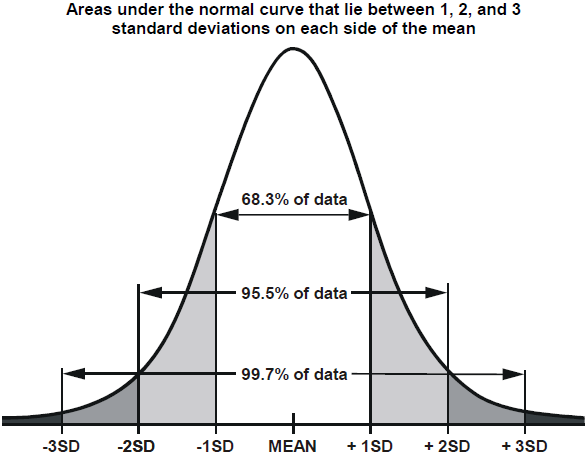
“Relatively typical†is in the eye of the beholder, but to invoke the normal curve metaphor, typicality can be defined as falling within one standard deviation of the mean (i.e., the general political environment in nearly 7 out of 10 election cycles). Of course, if social and economic circumstances surrounding the current presidential election truly are “unprecedented,†it could even be ventured that the 2020 presidential election is taking place in a political environment fully two standard deviations from the norm (i.e., more unusual than 9 out of 10 presidential election cycles).
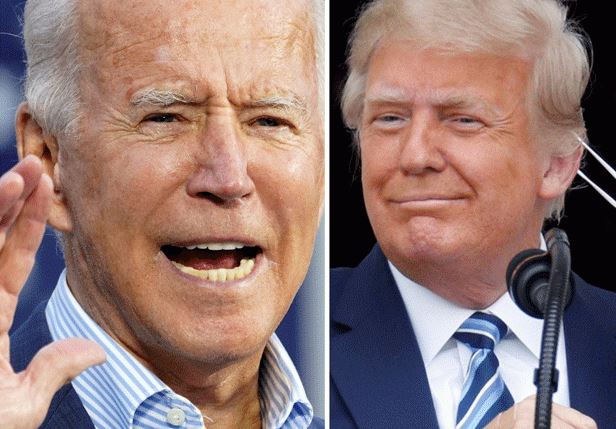
Photo credits: Kevin Lamarque and Tom Brenner / Reuters
To conclude, I am not predicting the outcome of the presidential election, in which statistical models infinitely more sophisticated than my simple PEI heuristic give Joe Biden a 9-to-1 edge over Joe Biden. What I am asserting, however, is that — based solely on their respective personality profiles as assessed at the Unit for the Study of Personality in Politics — it’s advantage Donald Trump.

Graphic: FiveThirtyEight (Nov. 1, 2020)
Related reports
Projecting the Winner of the 2020 Presidential Election: The Personal Electability Index (July 8, 2019)
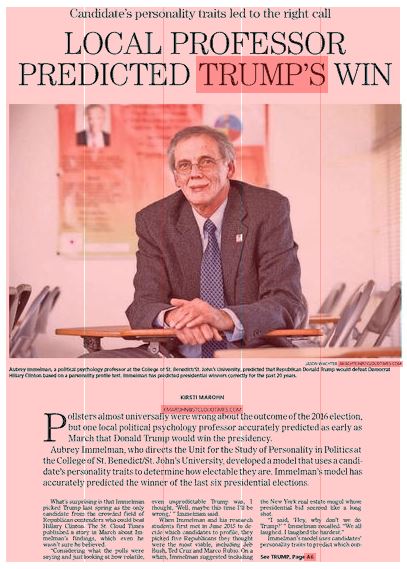
Projecting the Winner of the 2016 Presidential Election: The Personal Electability Index (Feb. 29, 2016)
Research paper
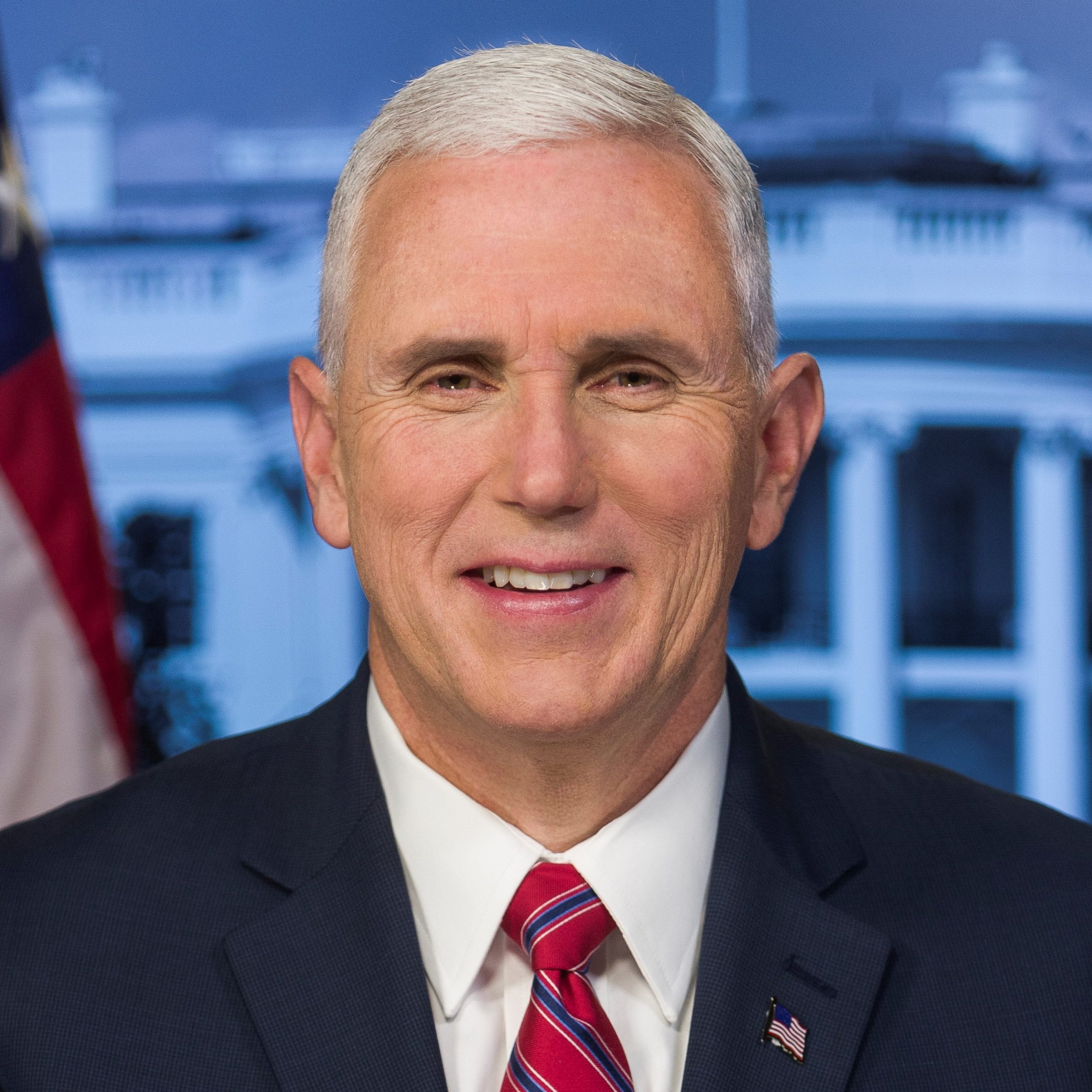 The Political Personality of U.S. Vice President Mike Pence. Working paper, Unit for the Study of Personality in Politics, St. John’s University/College of St. Benedict, May 2017. Abstract and link for full-text (19 pages; PDF) download at Digital Commons: http://digitalcommons.csbsju.edu/psychology_pubs/118/
Abstract
The research paper presents the results of an indirect assessment of the personality of U.S. vice president Mike Pence, from the conceptual perspective of personologist Theodore Millon. Information concerning Pence was collected from biographical sources and media reports and synthesized into a personality profile using the Millon Inventory of Diagnostic Criteria (MIDC), which yields 34 normal and maladaptive personality classifications congruent with Axis II of DSM-5.
The personality profile yielded by the MIDC was analyzed on the basis of interpretive guidelines provided in the MIDC and Millon Index of Personality Styles manuals. Pence’s primary personality pattern was found to be Conscientious/dutiful, complemented by secondary Dominant/asserting, Ambitious/confident, and Accommodating/cooperative features and a minor Outgoing/congenial tendency.
With the exception of the outgoing tendency, Pence’s profile is nearly identical to that of the more introverted 2012 Republican presidential nominee Mitt Romney, who has a minor Retiring/reserved tendency.
In the absence of concurrent primary personality patterns serving to moderate or offset high conscientiousness, Pence may be described as a dutiful conformist personality type with a conscientious deliberator leadership style. Leaders with this personality profile are characteristically prudent, proper, dignified, dependable, and more principled than most personality types. They are highly organized, with a strong work ethic and careful attention to detail. Dutiful and diligent, conscientious leaders excel in crafting public policy, though they are not typically regarded as visionary or transformational leaders.
The major implication of the study is that it offers an empirically based personological framework for identifying psychological attributes on the part of Pence that might serve to complement, amplify, or attenuate personality traits that drive President Donald Trump’s leadership behavior as chief executive.
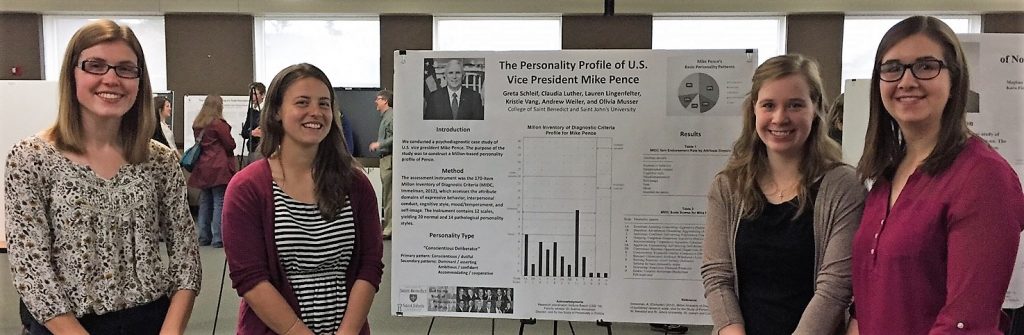
Olivia Musser, Lauren Lingenfelter, Claudia Luther, and Greta Schleif present “The Personality Profile of U.S. Vice President Mike Pence†at the College of St. Benedict, St. Joseph, Minn., April 27, 2017.
Topical report
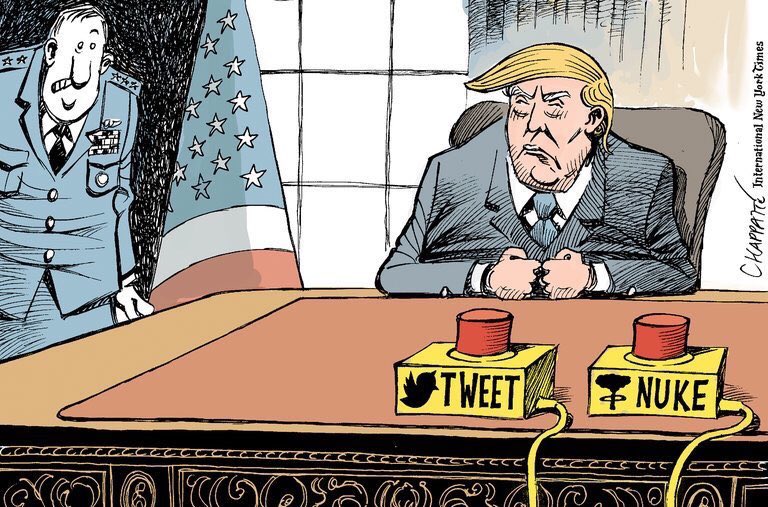
Trump, Twitter Fingers Flying, Exclaims. Pence, Note Cards in Hand, Explains.

Vice President Mike Pence at the Summit of the Americas in Lima, Peru, on Saturday, April 14, 2018. He stepped in for President Trump at the summit meeting, an increasingly common role for Mr. Pence as the president appears not to relish international travel. (Photo credit: Juan Pabo Azabache / Associated Press via The New York Times)
By Julie Hirschfeld Davis

April 15, 2018
Excerpts
LIMA, Peru — As President Trump was tweeting “Mission Accomplished!†on Saturday morning after the strikes on Syrian chemical weapons facilities, Vice President Mike Pence was tackling what has become a familiar task: translating his boss’s outbursts into carefully honed language that could reassure world leaders and the public. …
It was the latest instance of Mr. Pence — as earnest, conventional and on-message a politician as Mr. Trump is irreverent, unorthodox and unscripted — working to smooth the rough edges of a president who routinely draws controversy. …
In Lima, armed with a thick binder of briefing materials, Mr. Pence delivered meticulously scripted statements printed on cards that he toted around the summit meeting site and read from faithfully, hitting on his main theme of preserving the region as a “hemisphere of freedom,†a phrase he repeated at least three times in his closing remarks. …
Mr. Pence’s disciplined delivery of the American message after the Syria strikes stood in contrast to the presidential tweet, which recalled an earlier president’s premature declaration of victory in Iraq and prompted a spate of bitter criticism. …
Related reports on this site
The Personality Profile of U.S. Vice President Mike Pence (April 28, 2017)
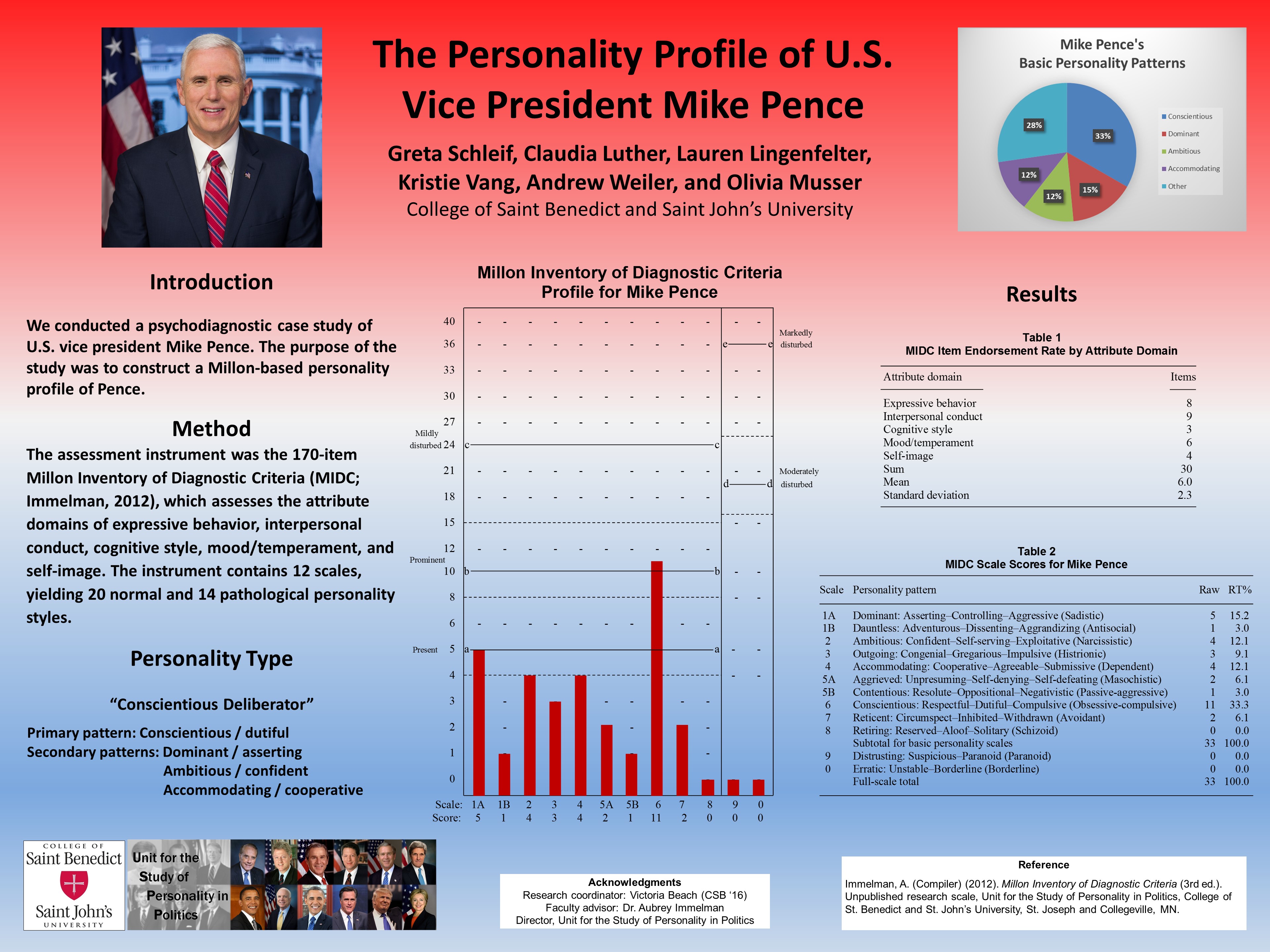
Click on image for larger view
The Personality Profile of 2012 Republican Presidential Candidate Mitt Romney (June 2, 2011)
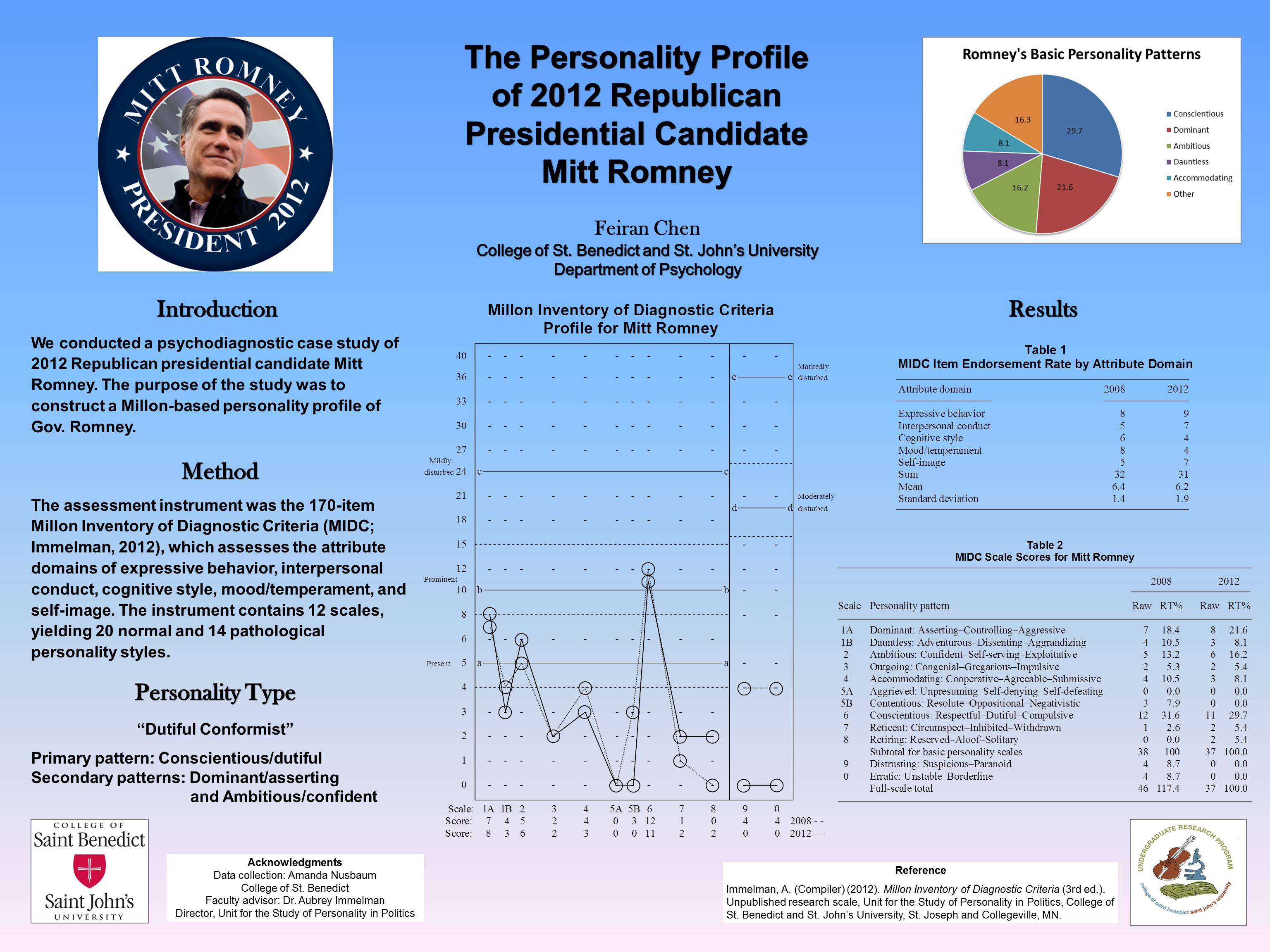
Click on image for larger view
The Political Personality of 2020
Democratic Vice-Presidential Nominee Kamala Harris
September 1, 2020
A psychological analysis of U.S. senator Kamala Harris — Democratic vice-presidential nominee in the 2020 U.S. presidential election — by Anne Marie Griebie, Yitao Zhang, and Aubrey Immelman, Ph.D., at the Unit for the Study of Personality in Politics revealed that Sen. Harris’s primary personality pattern is Dominant/asserting, complemented by secondary Ambitious/confident and Outgoing/congenial patterns. Typologically, Harris may be characterized as a high-dominance charismatic.
Presidential Electability Index range: 22-36
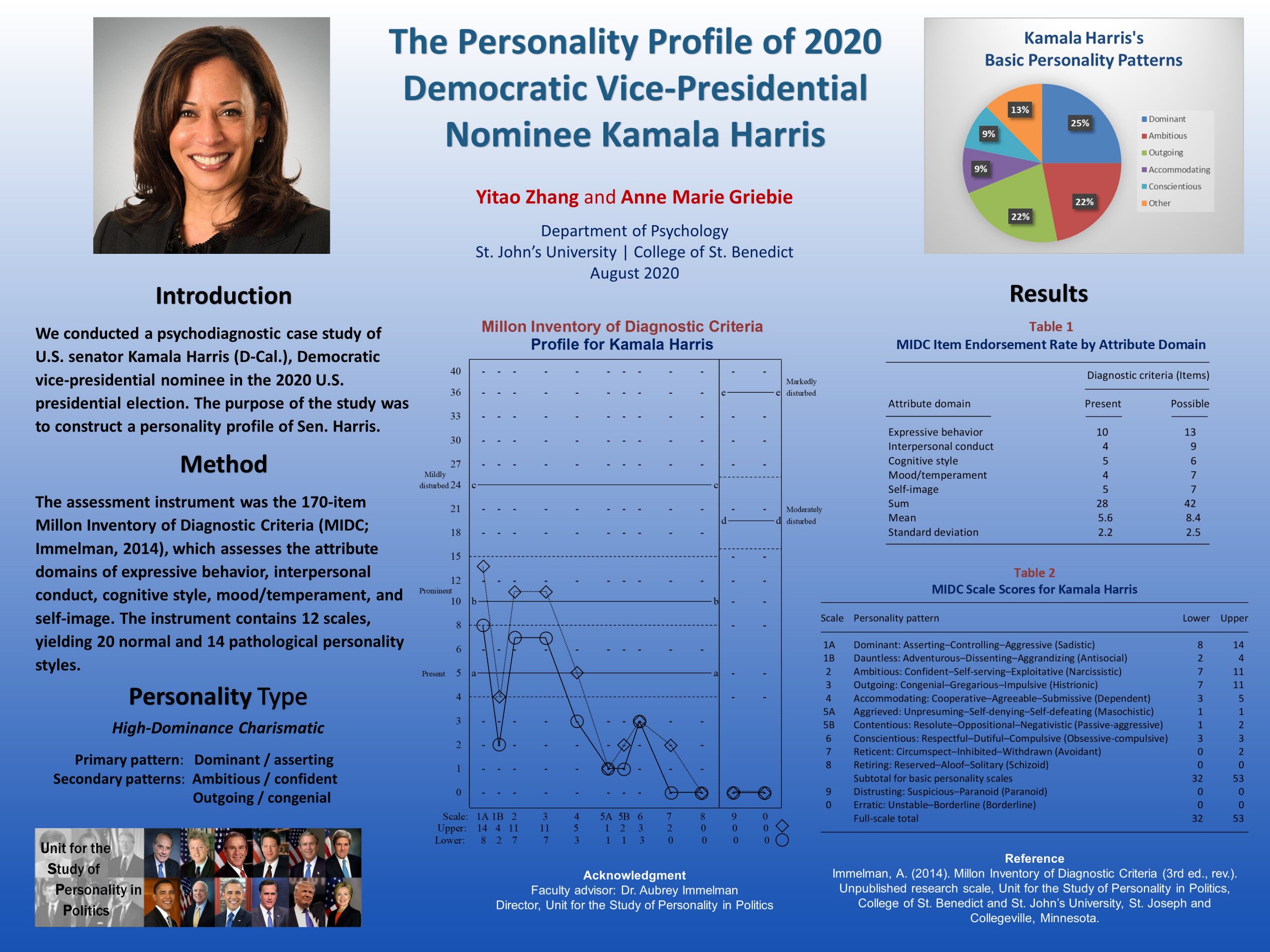
Click on image for larger view
Abstract
The poster presents the the results of an indirect assessment of the personality of U.S. senator Kamala Harris, Democratic vice-presidential nominee in the 2020 U.S. presidential election, from the conceptual perspective of personologist Theodore Millon.
Psychodiagnostically relevant data about Harris were collected from biographical sources and media reports and synthesized into a personality profile using the Millon Inventory of Diagnostic Criteria (MIDC), which yields 34 normal and maladaptive personality classifications congruent with DSM-III-R, DSM-IV, and DSM-5.
The personality profile yielded by the MIDC was analyzed in accordance with interpretive guidelines provided in the MIDC and Millon Index of Personality Styles manuals. Harris’s primary personality pattern was found to be Dominant/asserting (a measure of aggressiveness), complemented by secondary Ambitious/confident and Outgoing/congenial patterns — measures of narcissism and extraversion, respectively.
In summary, Harris’s personality composite can be characterized as high-dominance charismatic — charismatic by virtue of the elevated Ambitious–Outgoing amalgam.
Dominant individuals enjoy the power to direct others and to evoke obedience and respect; they are tough and unsentimental and often make effective leaders. Ambitious individuals are bold, competitive, and self-assured; they easily assume leadership roles, expect others to recognize their special qualities, and sometimes act as though entitled. Outgoing individuals are dramatic attention-getters who thrive on being the center of social events, go out of their way to be popular with others, and have confidence in their social abilities.
Harris’s major personality strengths in a political role are her confident assertiveness and personal charisma. Her major personality-based shortcoming is likely to be a predisposition to occasional lapses in emotional restraint or self-discipline.
Research paper
The Political Personality of 2020 Democratic Vice-Presidential Nominee Kamala Harris. Working paper, Unit for the Study of Personality in Politics, St. John’s University/College of St. Benedict, September 2020. Abstract and link for full-text (26 pages; PDF) download at Digital Commons: https://digitalcommons.csbsju.edu/psychology_pubs/131/
Annie Griebie explains the conceptual framework, methodology, and results of the assessment of Sen. Kamala Harris’s personality and leadership style. (9:53)
Topical report
Biden’s choice of Kamala Harris as VP candidate ‘unprecedented’ (William Roberts, Al Jazeera, Aug. 11, 2020) — Biden is an outgoing and accommodating personality, which should allow him to mesh well with Harris, said Aubrey Immelman, a professor of political psychology at the College of Saint Benedict and Saint John’s University in Minnesota. His deliberation and thoughtful process suggest Biden was able to develop “personal chemistry” with her. It is quite likely as well that Harris’s friendship with Biden’s late son Beau also helped. And she may well have been a consensus pick among his close advisers, including his wife Jill Biden, as well as Barack and Michelle Obama. “Metaphorically, Biden is led more by ‘heart’ than by ‘head’,” Immelman told Al Jazeera.
Update: October 7, 2020
As VP Debate Nears, Experts View Kamala Harris’s Personality

John Martin-Joy M.D.

October 5, 2020
Excerpts
In the vice-presidential debate on October 7, Harris will go up against sitting vice president Mike Pence [link added].
Yet in contrast to Donald Trump [link added], little has been said about Kamala Harris by mental health professionals. What is known about her personality? …
In the world of personality assessment, psychologist Aubrey Immelman of the College of St. Benedict and St. John’s University has been researching and rating candidates for decades. Drawing on the work of Theodore Millon [link added], Immelman and his group have developed a personality metric that uses open sources and empirical ratings to assess, at a distance, the personality of major presidential candidates, “as publicly perceived.” …
How does Harris look to Immelman?
In her empirical ratings, Harris scored highly on the traits of “dominant,” “narcissistic/confident,” and “outgoing.” This assertive and charismatic pattern, Immelman predicted last year [link added], made Harris, with Biden, one of the top two most electable candidates then running in the Democratic primary. (Outgoing, dominant candidates often do better than conscientious/dutiful ones, who may have trouble “reading” others and are less happy while working the room.)
As Biden’s ratings show, he too is outgoing. But he emerges as more of an accommodator or conciliator than Harris. How would the two get along in office?
In a recent e-mail interview, Immelman told me that if Harris is elected as vice president, Harris might well outshine Biden. More ambitious than he is, Harris “may play a prominent role” in any Biden administration. Indeed, Immelman ventures to suggest that the “cooperative and loyal” Biden is better suited to being vice president than president. …
What about the upcoming vice presidential debate between Harris and Mike Pence? Immelman cautions that he had less information to work with in assessing Pence. But the vice president’s ratings show high scores on conscientiousness.
Pence’s major asset in the debate, Immelman predicts, “will be his attention to detail” in articulating and supporting Trump’s positions.
A conscientious style may be helpful in office, Immelman said, especially in the executive branch. But it is not so helpful in campaigning. A conscientious personality can come across as rigid, preachy, and even boring—a potential hazard for the vice president on October 7.
“I think Harris will have the edge,” Immelman told me. In his view, Harris’s gregarious personality, confidence, and dominance are likely to throw the cautious Pence off guard. This will be especially true if the debate is “free-wheeling” and “less structured” in format.
Despite his findings, Immelman acknowledges some uncertainty. “The area that gives me the most pause,” said Immelman, is that Harris “is somewhat lacking in ‘gravitas’ – a shortcoming not evident in Pence. Harris sometimes has a slightly unserious tone, even when addressing serious matters.” For Immelman, this makes for incongruence between the content of what Harris says and the facial expression and body language he employs when she says it.
The Political Personality of 2020
Democratic Presidential Nominee Joe Biden
August 18, 2020
A psychological analysis of former U.S. vice president Joe Biden — Democratic nominee in the 2020 U.S. presidential election — by Anne Marie Griebie, Kiara Westendorf, Yitao Zhang, and Aubrey Immelman, Ph.D., at the Unit for the Study of Personality in Politics revealed that Vice President Biden’s primary personality pattern is Outgoing/gregarious, complemented by a secondary Accommodating/cooperative pattern and subsidiary Ambitious/confident features. Typologically, Biden may be characterized as a conciliatory extravert with an interpersonal leadership style.
Presidential Electability Index range: 21-33
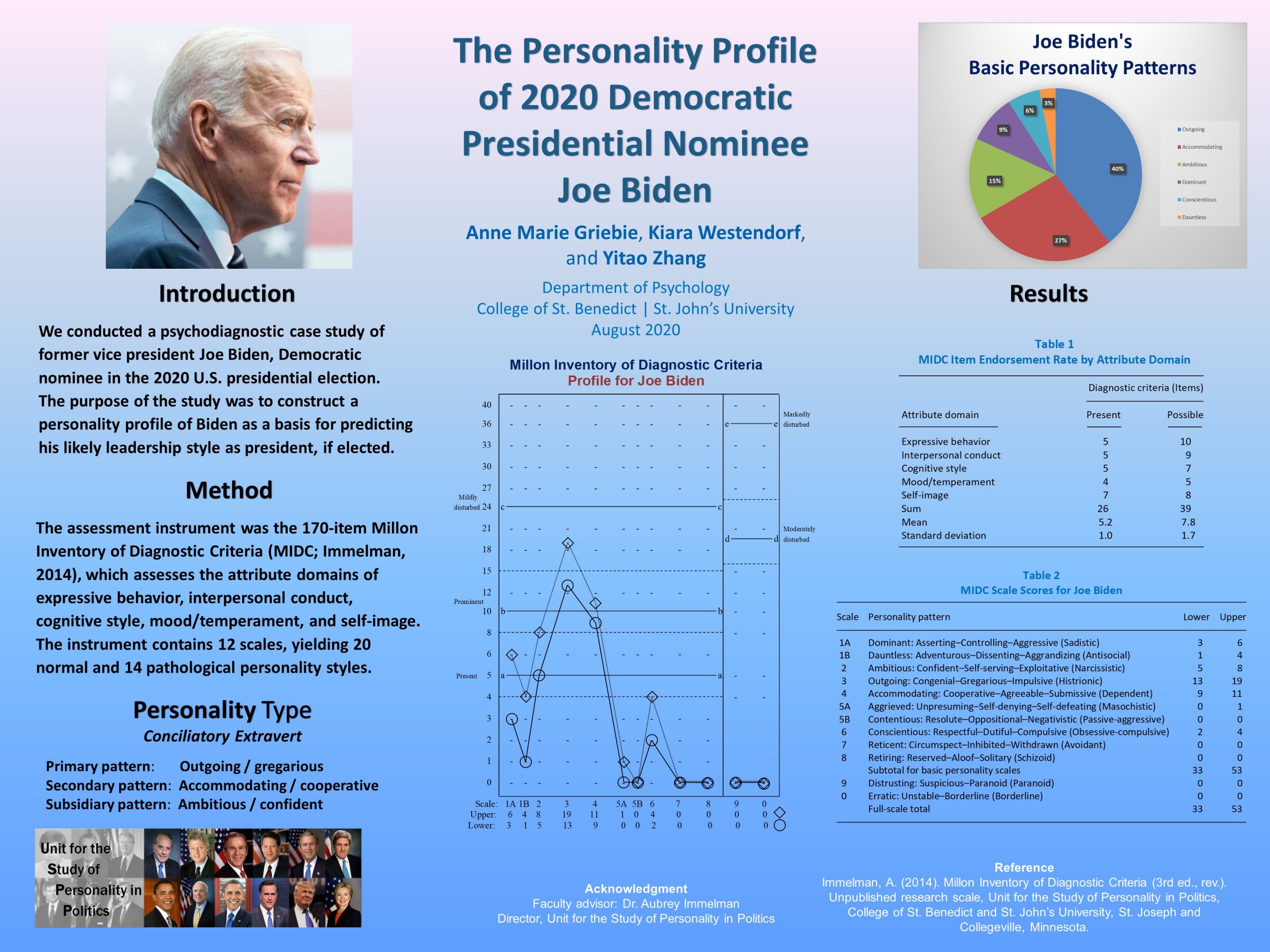
Click on image for larger view
Abstract
The poster presents the results of an indirect assessment of the personality of former U.S. vice president Joe Biden, Democratic nominee in the 2020 U.S. presidential election, from the conceptual perspective of personologist Theodore Millon.
Psychodiagnostically relevant data about Biden were collected from biographical sources and media reports and synthesized into a personality profile using the Millon Inventory of Diagnostic Criteria (MIDC), which yields 34 normal and maladaptive personality classifications congruent with DSM-III-R, DSM-IV, and DSM-5.
The personality profile yielded by the MIDC was analyzed on the basis of interpretive guidelines provided in the MIDC and Millon Index of Personality Styles manuals. Biden’s primary personality pattern was found to be Outgoing/gregarious, complemented by a secondary Accommodating/cooperative pattern and subsidiary Ambitious/confident features.
The prominence of the Outgoing pattern, in conjunction with a distinctive Accommodating pattern in his overall personality configuration, is indicative of the conciliatory extravert subtype. This personality composite provides the personological substrate for a strong affiliation motive. These individuals are driven to seek approval; they want others to like them and view them as a friend or ally. To achieve that motivational goal, they often compliment, praise, or flatter others, presenting an image of goodwill. When disagreements occur, they attempt to smooth things over, sometimes at the cost of conceding.
Leaders with Biden’s personality profile are likely to exhibit an interpersonal leadership style, characterized by flexibility, compromise, and an emphasis on teamwork. The general tenor of a Biden presidency likely will be conciliatory, which could render a prospective President Biden vulnerable to manipulation by pressure groups and handicap him in negotiations or conflicts with foreign adversaries.
Research paper
The Political Personality of 2020 Democratic Presidential Nominee Joe Biden. Working paper, Unit for the Study of Personality in Politics, St. John’s University/College of St. Benedict, August 2020. Abstract and link for full-text (22 pages; PDF) download at Digital Commons: https://digitalcommons.csbsju.edu/psychology_pubs/130/
Annie Griebie explains the conceptual framework, methodology, and results of her assessment of Vice President Joe Biden’s personality and leadership style. (9:42)
Update: October 8, 2020
Biden’s Mental State: What the Experts Are Saying
John Martin-Joy M.D.
September 29, 2020
Excerpts
[It] is hard to find a psychiatrist or psychologist who has commented on the Democratic nominee in the media. Is psychological comment merely partisanship in professional disguise?
For years it has been known that psychiatrists tend to vote Democratic. In 1968, for example, President Lyndon Johnson’s pollster noted that doctors were overwhelmingly Republican — “except for psychiatrists.†As of 1964, as Johnson’s men noted, psychiatrists had polled Democratic by a margin of 67% to 33%. …
Outside the glare of the media, one can turn to the groves of academe for careful study of Biden’s personality. Anne Marie Griebie and psychologist Aubrey Immelman of the College of St. Benedict and St. John’s University have recently conducted an empirical study of Biden’s public personality. Their Biden profile [link added] is the latest in a long and systematic series of at-a-distance evaluations of presidential candidates [link added] conducted by Immelman’s group since the 1990s.
Griebie and Immelman assembled open-source material on Biden, then conducted empirical ratings of his personality using the Millon Inventory of Diagnostic Criteria (MIDC). The MIDC’s personality typology is related to, although not identical to, the DSM system.
The results? Biden’s personality, the researchers found, is predominantly outgoing/gregarious, with lesser features of accommodating/cooperative and ambitious. The leadership of individuals who have this profile has an interpersonal focus that involves “flexibility, compromise, and an emphasis on teamwork.â€
Their point has some echoes in Jules Witcover’s thorough and admiring biography of Biden. There, the candidate is described as strikingly “garrulous†and empathic over many years, often reaching out to others in times of tragedy and loss even as he aimed repeatedly for the presidency.
Griebe and Immelman believe his gregarious and accommodating personality style may make Biden vulnerable to “manipulation by pressure groups†and may make negotiations with world leaders difficult.
In some ways, the group’s evaluation of Biden resembles their past findings about Barack Obama [link added], whom they found also showed accommodating traits. Before Obama’s election, Immelman expressed concern about whether Obama was tough enough to succeed in the presidency.
The group sees Kamala Harris [link added], Biden’s choice for vice president, as dominant/asserting, with elements of ambitious/confident and outgoing/congenial. This kaleidoscope of traits adds up to a style that the group sees as “high dominance charismatic.†It is not clear how Immelman believes a candidate with such a personality will get along with the outgoing and accommodating Biden.
And Donald Trump? [link added] Immelman’s group sees him as “ambitious/exploitative†— that means narcissistic, they explain — and also outgoing/impulsive. This is an unusual combination, one they have not found in the 2020 Democratic nominees.
Can Biden defeat Trump in 2020? Mental health professionals have a poor track record of predicting adverse events in their patients, let alone election results involving candidates they have never met. But Immelman and colleagues have developed an empirical instrument they call the “Personal Electability Index†(PEI).
The PEI, has predicted correctly — “before Super Tuesday,†no less — “the outcome of every presidential election since 1996.â€
The PEI uses ratings of personality traits, “as publicly perceived,†to predict each candidate’s appeal to independent voters. Independents allegedly base their decisions on personality more than politics — and are said to favor outgoing, confident, and dominant candidates while disliking those who are introverted and overconscientious. (Such candidates tend to have trouble connecting with people during the campaign.)
In March 2016, while polls heavily favored Hillary Clinton, the PEI calmly predicted she would lose to Donald Trump.
What does all this mean for the 2020 election? Last year Immelman’s group used the PEI to assess the candidates’ personality traits, comparing Trump with all of the Democratic primary candidates, including Biden and Harris. The PEI predicted that Biden’s outgoing personality would lead him to surpass all of the other candidates in the Democratic primary race.
And according to the PEI, Donald Trump will win in November 2020.
Claims of infallibility for the PEI, of course, should be taken with a grain of salt. As described, its value rests on a set of very changeable assumptions. And there have been only six elections since 1996, making its sample size extremely small and its track record a very thin basis for prediction. Still, as predictions go, it at least appears to have some empirical foundation.
Presidential candidates, no matter how accommodating or conciliatory, are unlikely to concede a year before an election because of a research finding by a psychologist. In our system, it is, finally, up to the voters and not to the mental health professionals to decide.
Full report at Psychology Today
Related reports on this site
Projecting the Winner of the 2020 Presidential Election: The Personal Electability Index (July 8, 2019)
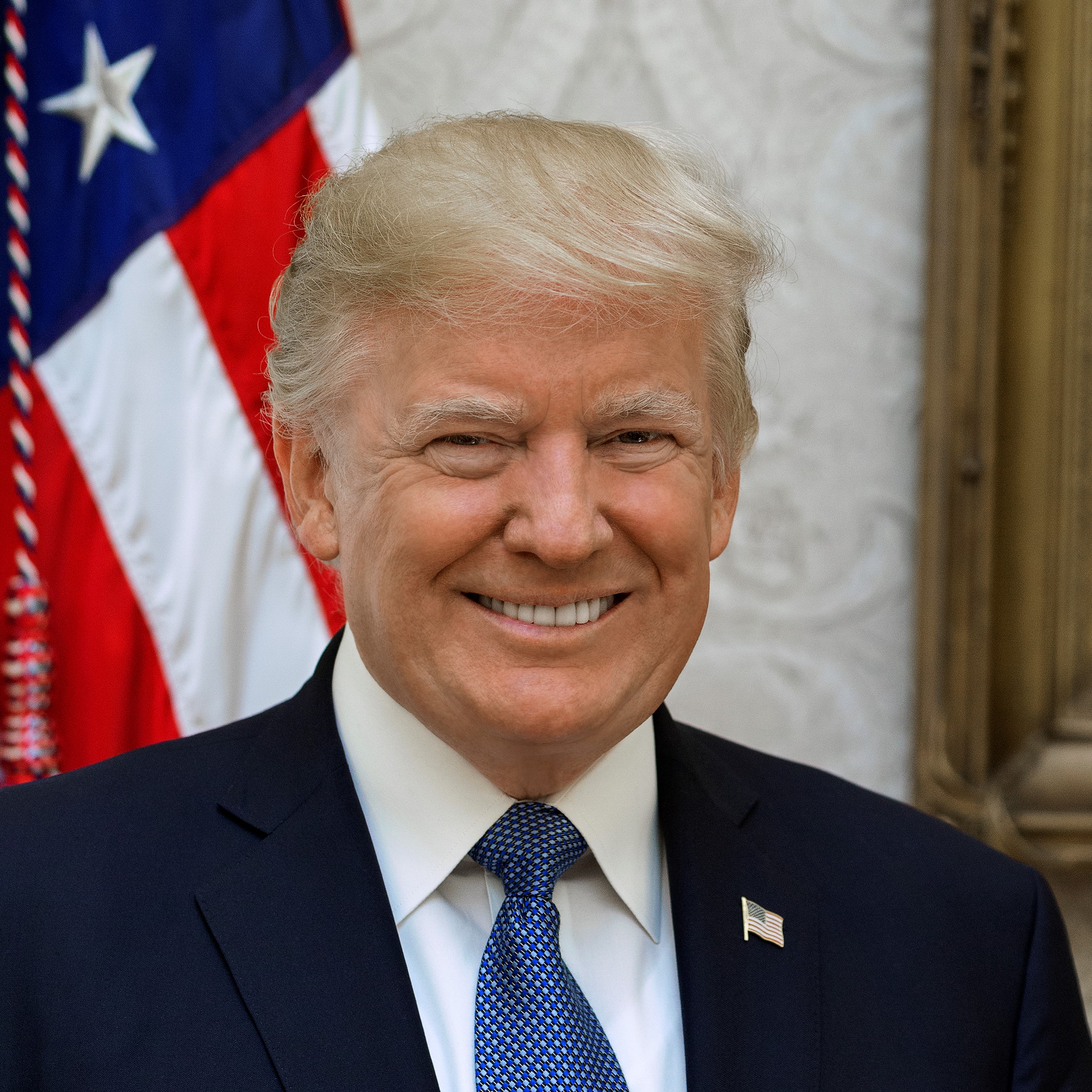
Presidential Electability Index
Range: 65-77 (71 ±6); dysfunctionality adjusted = 45
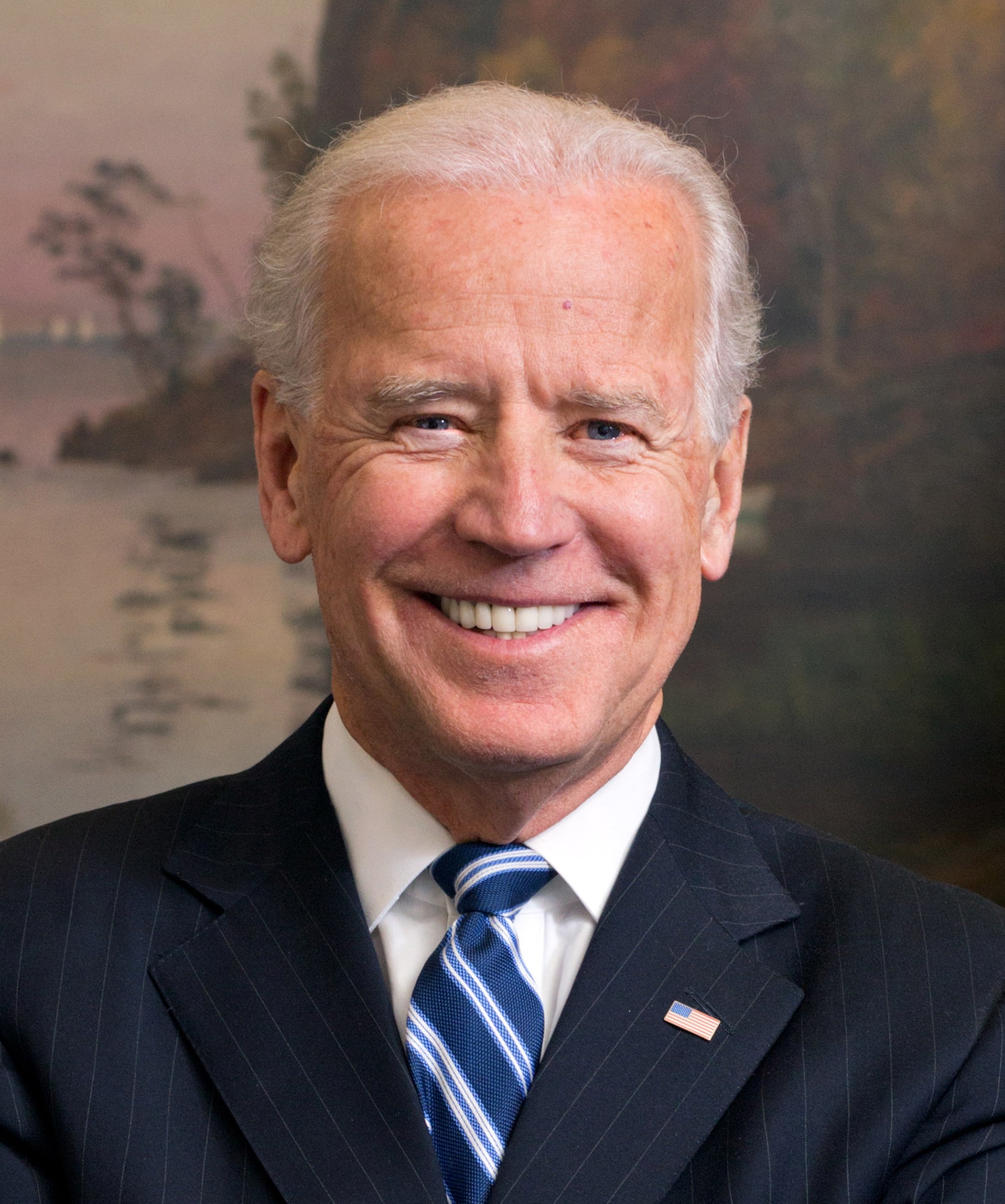
Presidential Electability Index
Range: 16-29 (22.5 ±6.5) / Revised Aug. 2020: 21-33 (27 ±6)
The Personality Profile of Former U.S. Vice President Joe Biden (April 25, 2019)
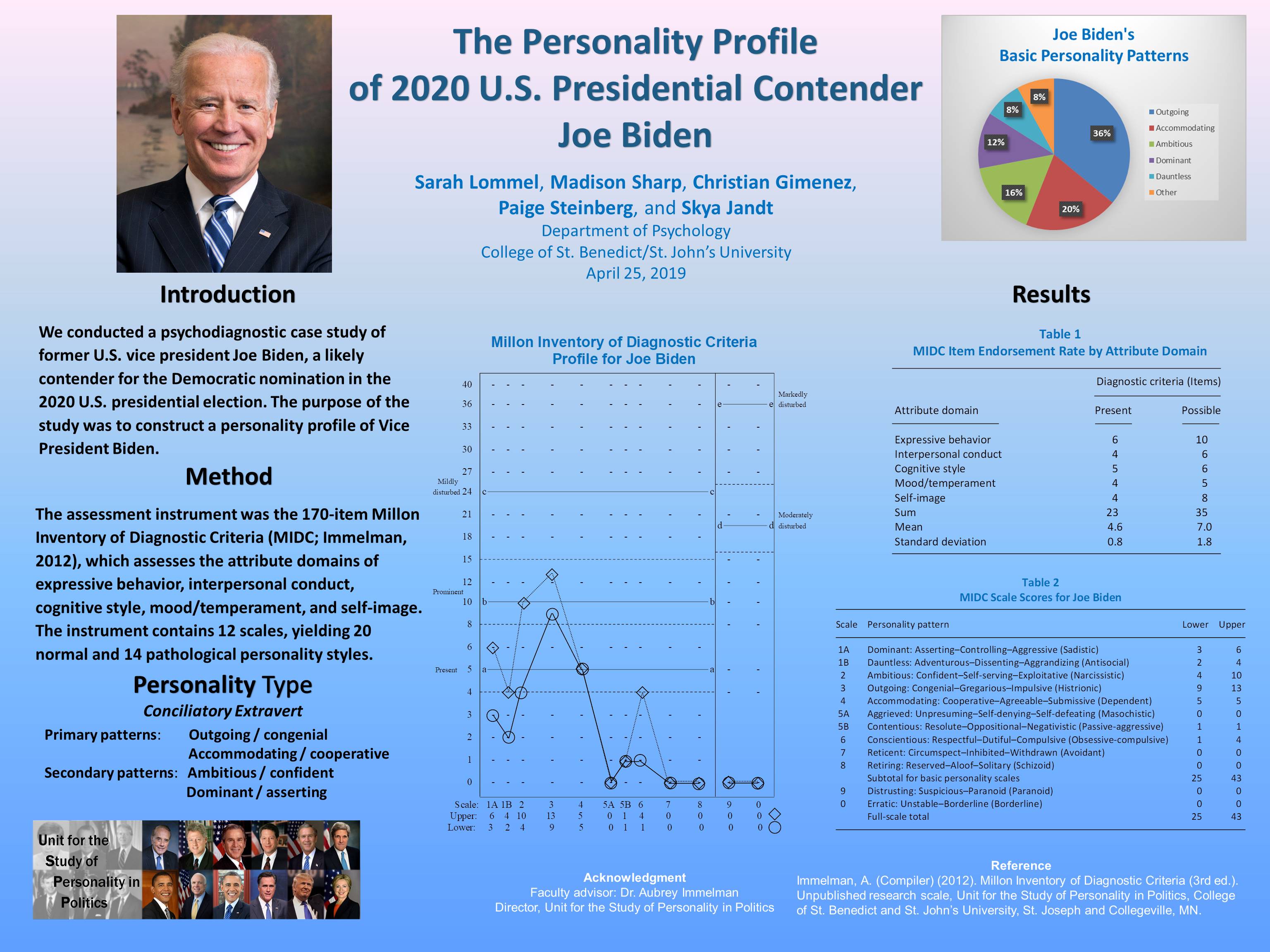
Click on image for larger view
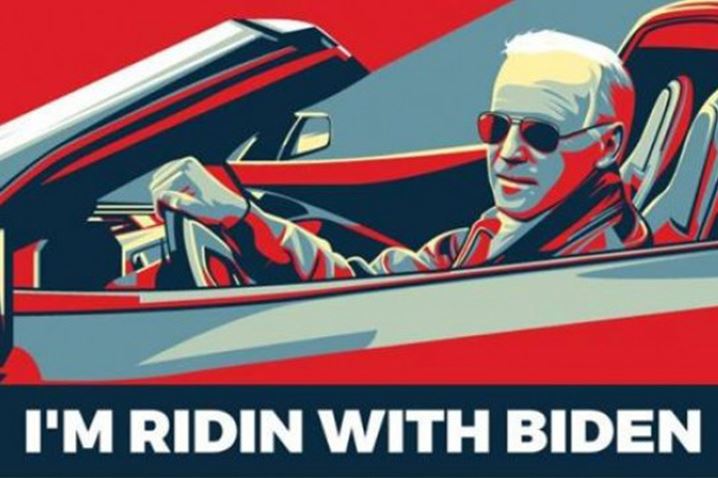
Joe Biden’s Second Act? 2020 “Ridin’ with Biden†(May 31, 2017)
Psychological Profile Presented at ISPP 2020 Annual Meeting
U.S. President Donald J. Trump
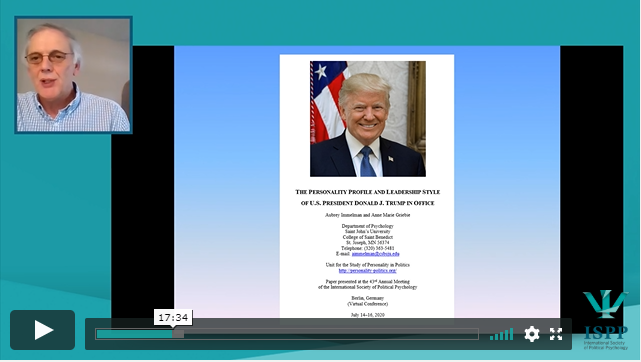
Aubrey Immelman presents his paper, with Anne Marie Griebie, on “The Personality Profile and Leadership Style of U.S. President Donald J. Trump in Office†at the 43rd Annual Scientific Meeting of the International Society of Political Psychology, July 16, 2020. The meeting, originally scheduled for Berlin, Germany, was conducted in virtual format due to the global COVID-19 pandemic.
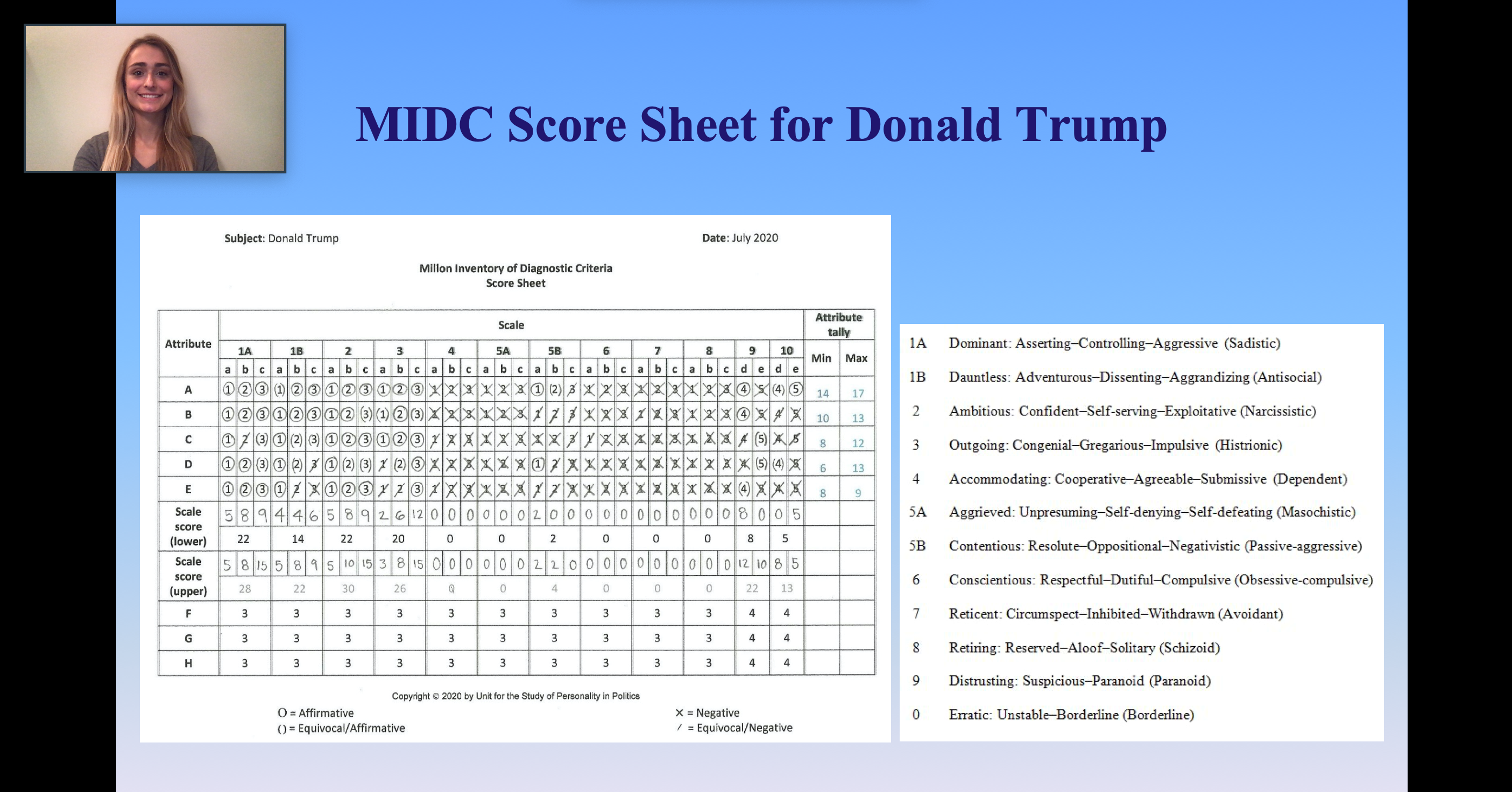
Annie Griebie explains the scoring system used in the assessment of President Donald Trump’s personality as revealed in office.
Research report
The Personality Profile and Leadership Style of U.S. President Donald J. Trump in Office. Paper presented at the 43rd Annual Scientific Meeting of the International Society of Political Psychology, Berlin, Germany, July 14-16, 2020. Abstract and link for full-text (71 pages; PDF) download at Digital Commons: http://digitalcommons.csbsju.edu/psychology_pubs/129/
Related presentations
Annie Griebie explains the conceptual framework, methodology, and results of her assessment of President Donald Trump’s personality as revealed in office. (9:39)
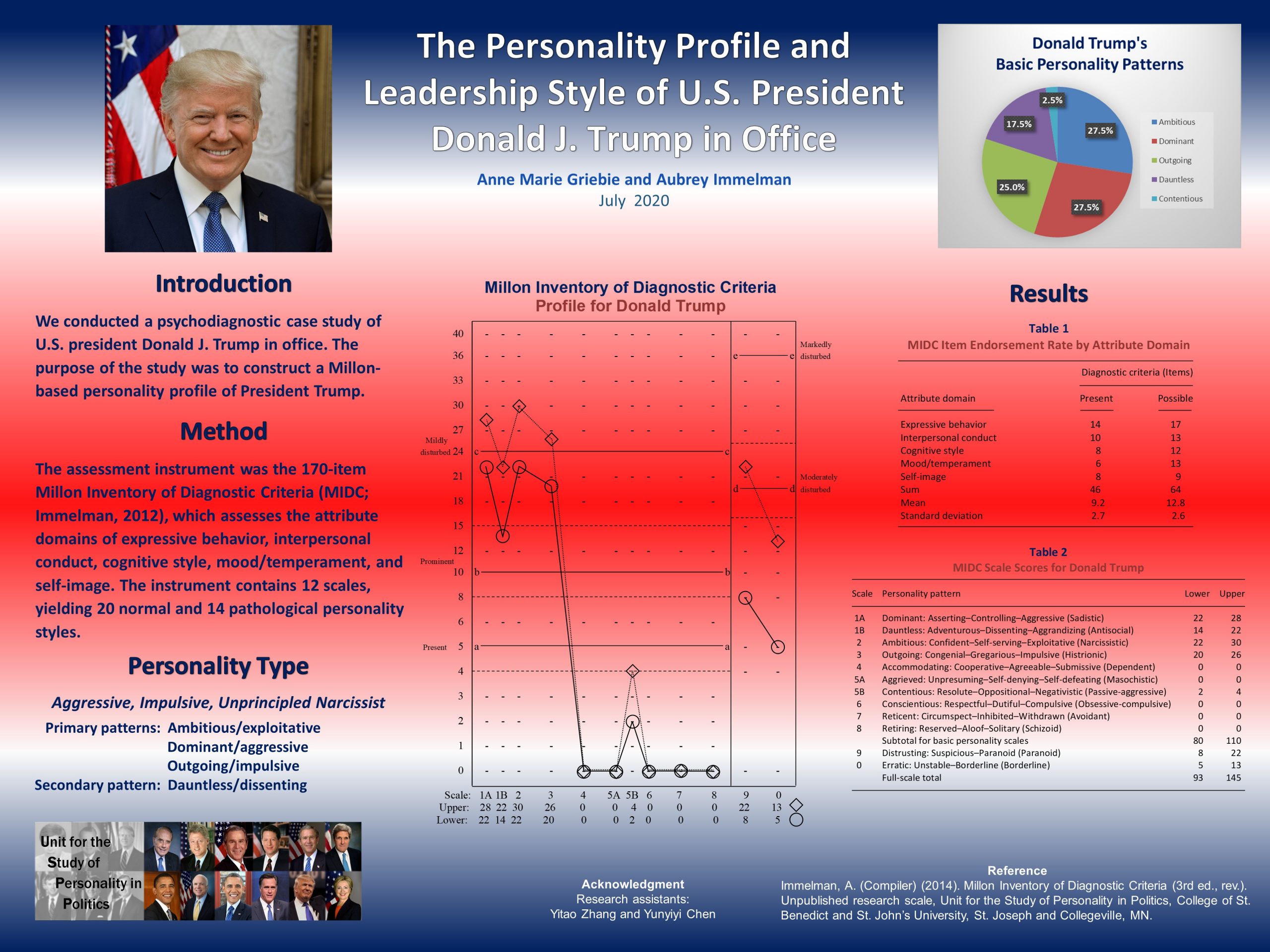
Click on image for larger view
More information » U.S. President Donald J. Trump
Related reports
The Political Personality of 2016 Republican Presidential Nominee Donald J. Trump. Working paper, Unit for the Study of Personality in Politics, St. John’s University/College of St. Benedict, October 2016 (Paper presented at the 41st Annual Scientific Meeting of the International Society of Political Psychology, San Antonio, TX, July 4-7, 2018). Abstract and link for full-text (31 pages; PDF) download at Digital Commons: http://digitalcommons.csbsju.edu/psychology_pubs/103/
The Leadership Style of U.S. President Donald J. Trump. Working paper, Unit for the Study of Personality in Politics, St. John’s University/College of St. Benedict, January 2017. Abstract and link for full-text (14 pages; PDF) download at Digital Commons: http://digitalcommons.csbsju.edu/psychology_pubs/107/
Rumors are swirling on the internet that Kim Jong-un is in a vegetative state or has died as the result of a botched cardiac procedure; however, there has been no confirmation of these reports by official government agencies or reliable sources.
38 North reports:
A train probably belonging to Kim Jong Un has been parked at the Leadership Railway Station servicing his Wonsan compound since at least April 21, according to commercial satellite imagery. The train’s presence does not prove the whereabouts of the North Korean leader or indicate anything about his health, but it does lend weight to reports that Kim is staying at an elite area on the country’s eastern coast.
April 26, 2020 Update: Dynastic Succession in North Korea
Anna Fifield, Washington Post bureau chief in Beijing and author of The Great Successor: The Divinely Perfect Destiny of Brilliant Comrade Kim Jong Un provides an informative analysis of the prospects for dynastic succession or continuity of governance in the event of Kim Jong-un’s death.
If Kim turns out to be fine, it would hardly be the first time that reports of the death of a North Korean leader had been greatly exaggerated. Japanese and South Korean newspapers killed off his grandfather, Kim Il Sung, and his father, Kim Jong Il, multiple times in the years before either man actually died.
Kim Jong Un’s premature demise was also reported in 2014, when his disappearance from public view for six weeks sparked talk of death by military coup, heart attack, or excessive cheese consumption. …
What if Kim Jong Un dies? There is no clear successor for him. …
April 28, 2020 Update: Medical Opinion by Kenneth B. Dekleva, M.D.
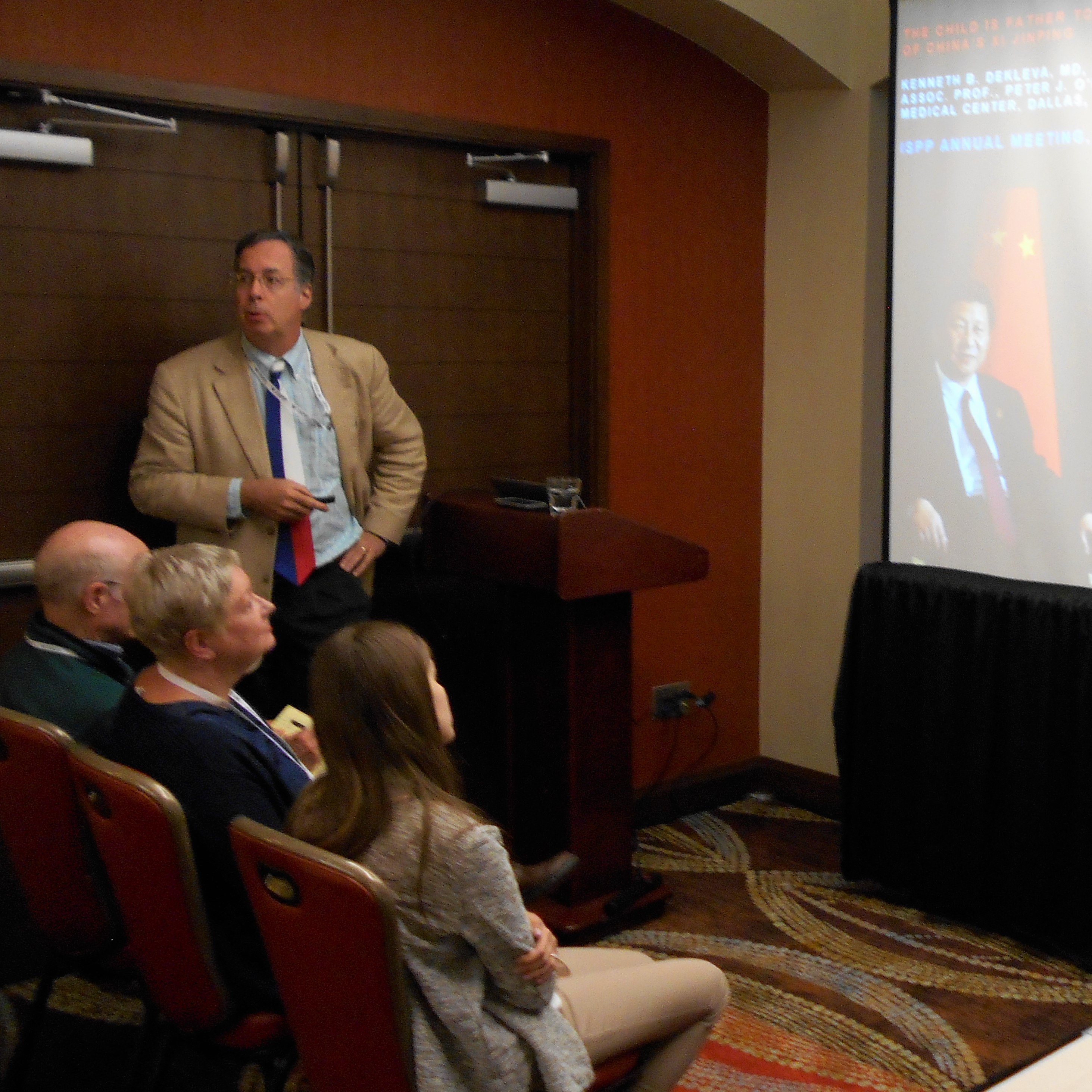
[Kim Jong Un’s] absence now is of notable concern, given multiple reports about Kim having received some form of cardiac surgery and possibly suffering from subsequent complications. While these reports remain unconfirmed, the security consequences of Kim’s sudden demise or incapacitation could be enormous, given the lack of clarity on what comes next. …
— I am Kim’s heart: The health status of Chairman Kim Jong Un
(Kenneth B. Dekleva, 38 North, April 28, 2020)
April 29, 2020 Update: Imagery Shows Train at Kim Jong Un’s Wonsan Compound Again
38 North reports:
Commercial satellite imagery from April 29 shows a train at the leadership train station that services Kim Jong Un’s compound in the coastal city of Wonsan. While a train was first observed at this station on April 21 and again on April 23, it cannot be determined whether it has remained at the station since then. On April 29, the train is situated in the same position as before. However, the engine is no longer parked alongside the south end of the train. Whether the engine car has departed or was simply moved under the station’s canopy is unclear. But in either case, the train does not appear to be prepared for departure.
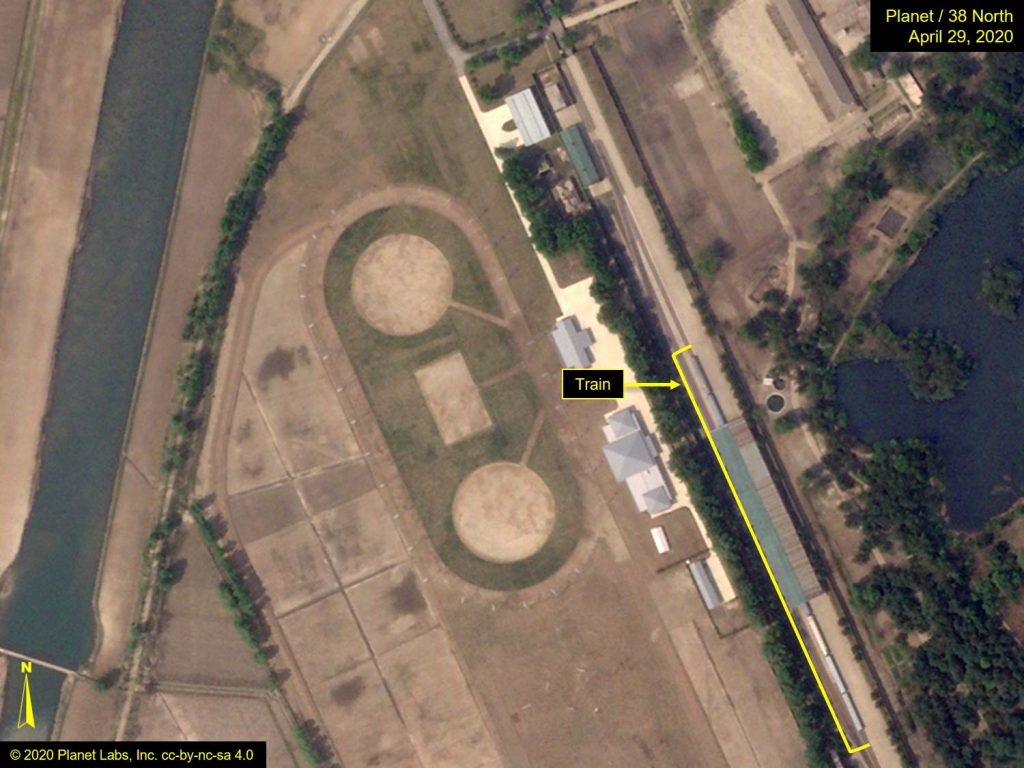
Image: ©2020 Planet Labs, Inc. via 38 North.
May 1, 2020 Update: Does Kim Jong Un Have a Succession Plan?
Chris Steinitz, Ken Gause, and Elizabeth Yang offer an insightful analysis at 38 North of scenarios for succession and continuity of governance in the event of Kim Jong-un’s demise.
If the leader were merely incapacitated, the immediate, temporary structure would likely be led by a small group of family and close aides, who would make decisions along established lines, maintaining the status quo. This small collective would carry out the day-to-day affairs of the regime, not unlike the group that supported Kim Jong Il after his stroke in 2008.
If Kim Jong Un dies, however, the situation would become much more precarious. An initial leadership group would likely be set up that includes those above, as well as members from the Party, military, and internal security. Whether someone like Kim Yo Jong would sit atop this structure or would assume the role of Supreme Leader is unclear. It is also possible that some male member of the Kim family could be put forth as a figurehead for legitimacy purposes, instead of Kim Yo Jong.
May 2, 2020 Update: Kim Jong Un Resurfaces

The New York Times reports:
North Korea’s leader, Kim Jong-un, resurfaced in public view on Friday, the North’s state news media reported Saturday, controverting three weeks of rumors and unconfirmed news reports that he was in grave danger after undergoing heart surgery. …
Mr. Kim, 36, had last appeared publicly on April 11. … Rumors subsequently went into overdrive, claiming that Mr. Kim was “in grave danger,†in a “vegetative state†after botched heart-valve surgery, or in quarantine after contracting Covid-19. Other reports said that China had sent doctors to Pyongyang to save him.
After its initial report on Saturday, the North Korean news agency released photos showing a smiling Mr. Kim applauding, cutting a ribbon, and standing with his hands behind his back at a new fertilizer factory.
Related links on this site
The Leadership Style of North Korean Leader Kim Jong-un (June 12, 2018)
North Korea Threat Assessment: The Psychological Profile of Kim Jong-un (April 8, 2013)
